

.webp)
Reconciling credit card transactions is one of the most time-consuming processes for finance teams. Traditionally, reconciliations for credit card transactions happen after monthly statements are issued, requiring manual matching between card transactions, expense reports, and receipts.
Modern finance teams, however, no longer need to wait for credit card transaction statements.
With automated credit card reconciliation, transactions flow into the expense management system in real time where draft expenses are automatically created, and receipt matching happens almost immediately instead of only at month end.
This guide explains how automated credit card workflows work, why traditional reconciliation slows teams down, and how Sage Expense Management helps simplify the process.
What Is Automated Credit Card Reconciliation?
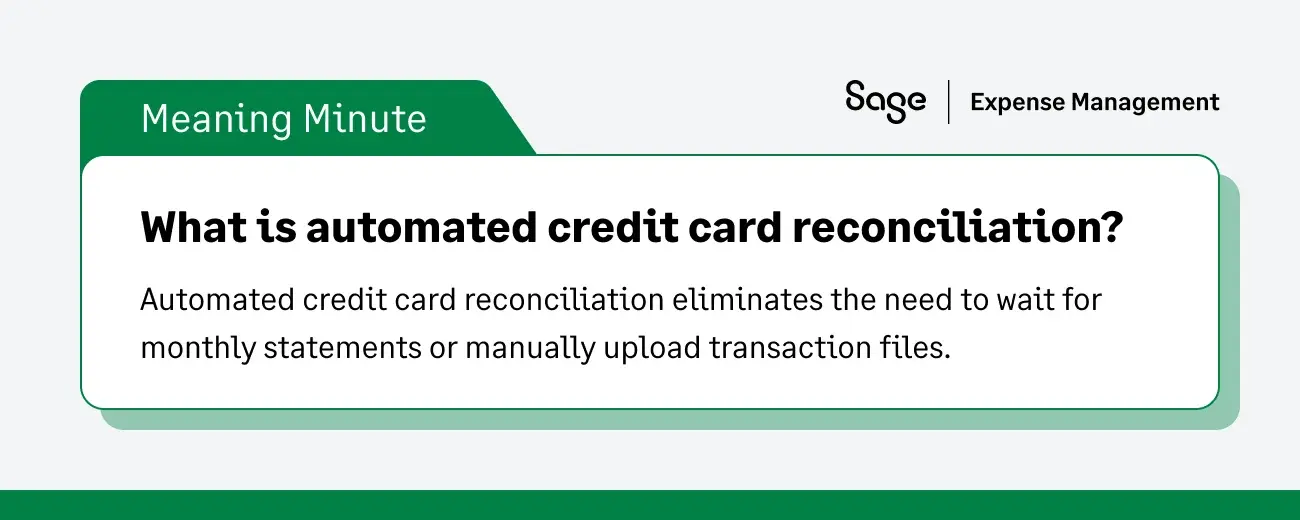
Automated credit card reconciliation eliminates the need to wait for monthly statements or manually upload transaction files.
Instead of reconciling transactions at month-end, transactions are imported automatically through real-time card feeds as they occur.
{{rtf="/did-you-know-cards"}}
How does an automated workflow work in an expense management system?
When a credit card transaction is received:
- A draft expense is created automatically
- Merchant name, amount, currency and date are pre-filled
- Matching happens continuously in the background
This shifts reconciliation from a reactive, statement-based process to a real time, ongoing workflow, giving finance teams continuous visibility into corporate card spend.
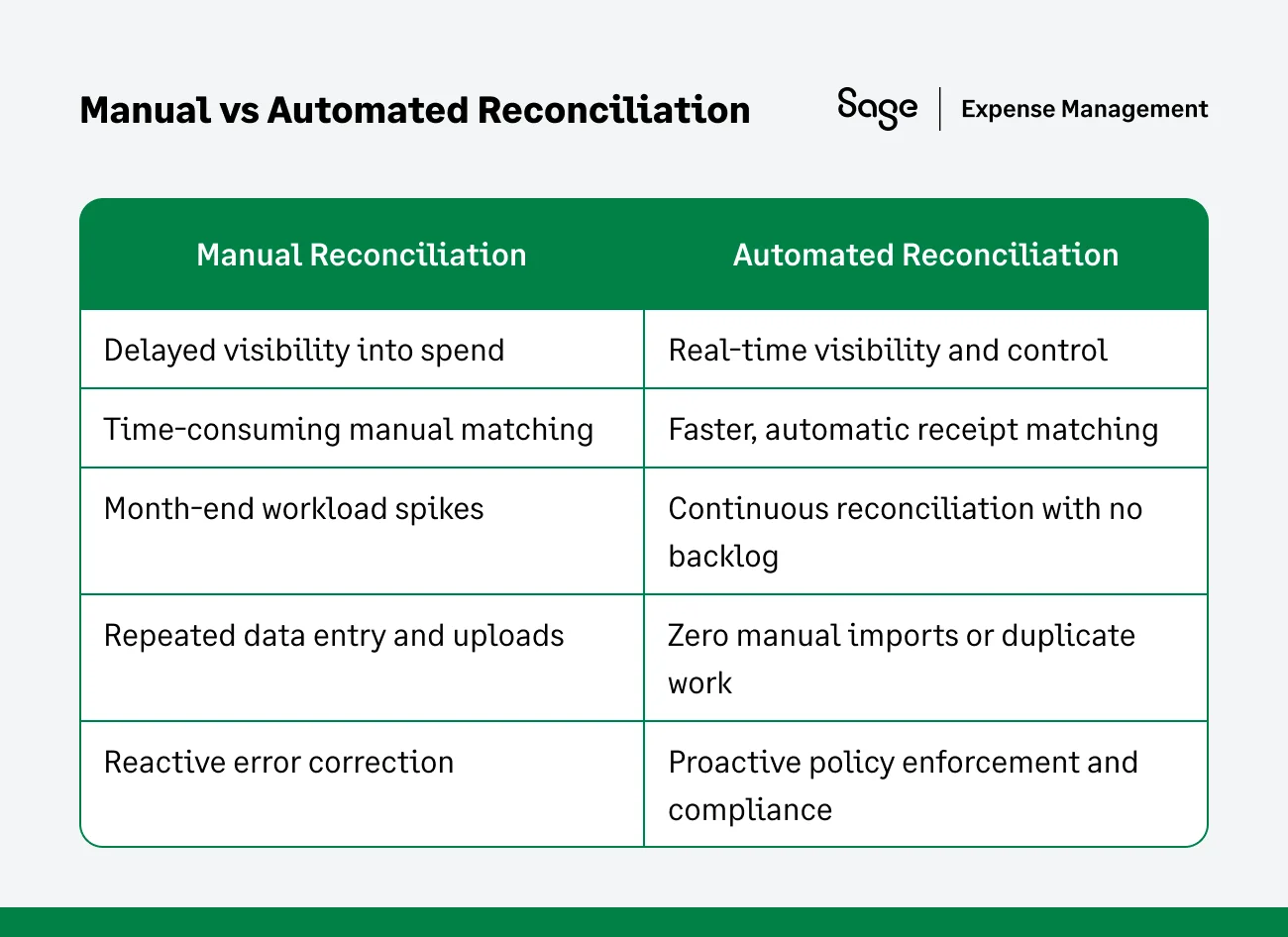
Why Traditional Credit Card Reconciliation Is Time-Consuming
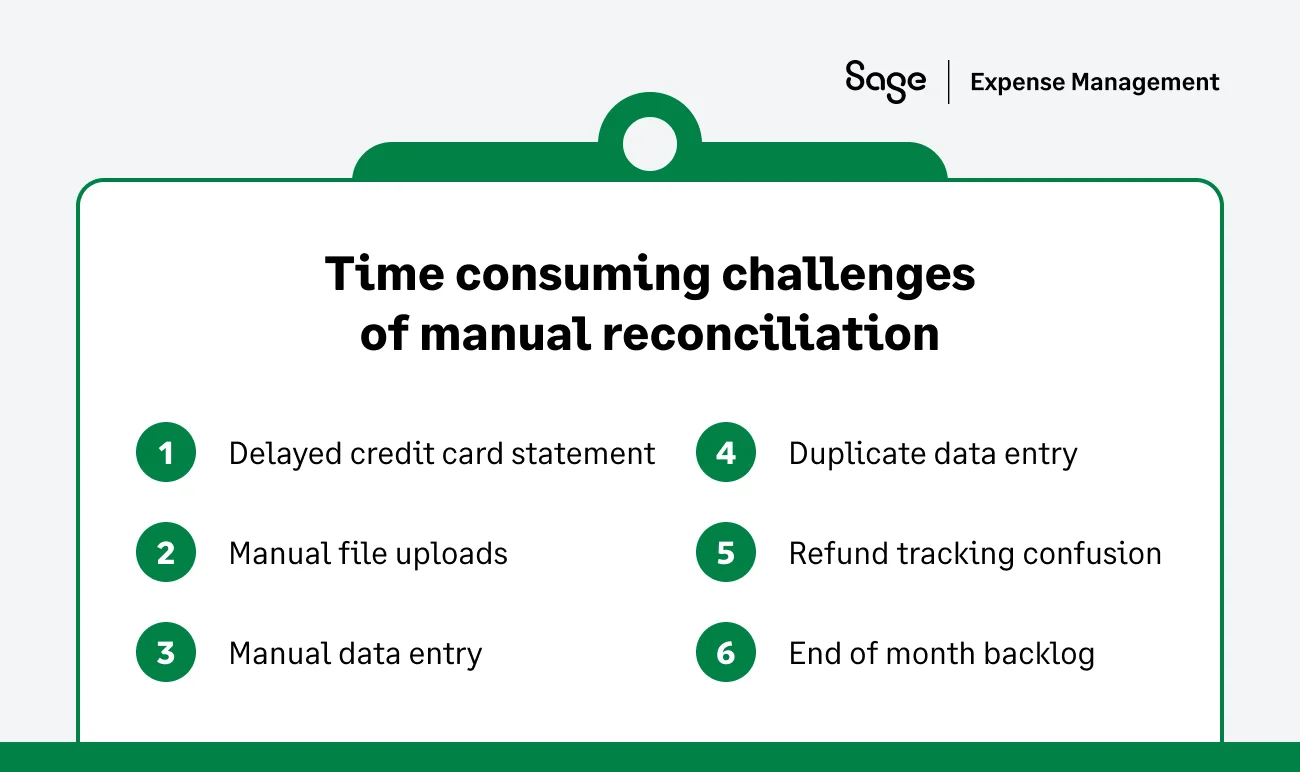
Manual reconciliation creates a chain reaction of inefficiencies.
Finance teams wait for credit card statements, download files, manually match transactions to receipts, re-enter data into spreadsheets and accounting systems, and follow up with employees for missing details.
By the time everything is reconciled, the data is already outdated, and leadership is working with delayed information.
If this process sounds familiar, we break down exactly how a time-consuming reconciliation workflow slows down finance teams and impacts different industries in detail here- Is Your Reconciliation Process Still Time Consuming?
This reactive approach leads to further errors and delays which thereby limit visibility, slow down the reconciliation process, and increase the risk of inaccuracies at a higher level.
Benefits of Automated Credit Card Reconciliation
For Finance Teams:
- Continuous reconciliation instead of month-end backlog
- Reduced manual data entry
- Fewer matching errors
- Faster close cycles
- Improved audit readiness
- Real-time visibility into corporate card spend
For Employees:
- No manual entry of transaction details
- Faster expense submission
- Less back-and-forth with finance
{{rtf-report-credit-card-reconciliation="/cta-banners"}}
How Sage Expense Management Helps
Here’s how an automated expense management software such as Sage Expense Management (formerly Fyle) automates credit card reconciliation workflows from transaction to accounting sync:
Real-Time Transaction Import
Sage Expense Management connects directly to your existing corporate credit cards and receives transaction data through real-time feeds. Unlike traditional bank feeds that depend on issuing banks or statement cycles, real-time feeds deliver transaction details as soon as purchases are processed.
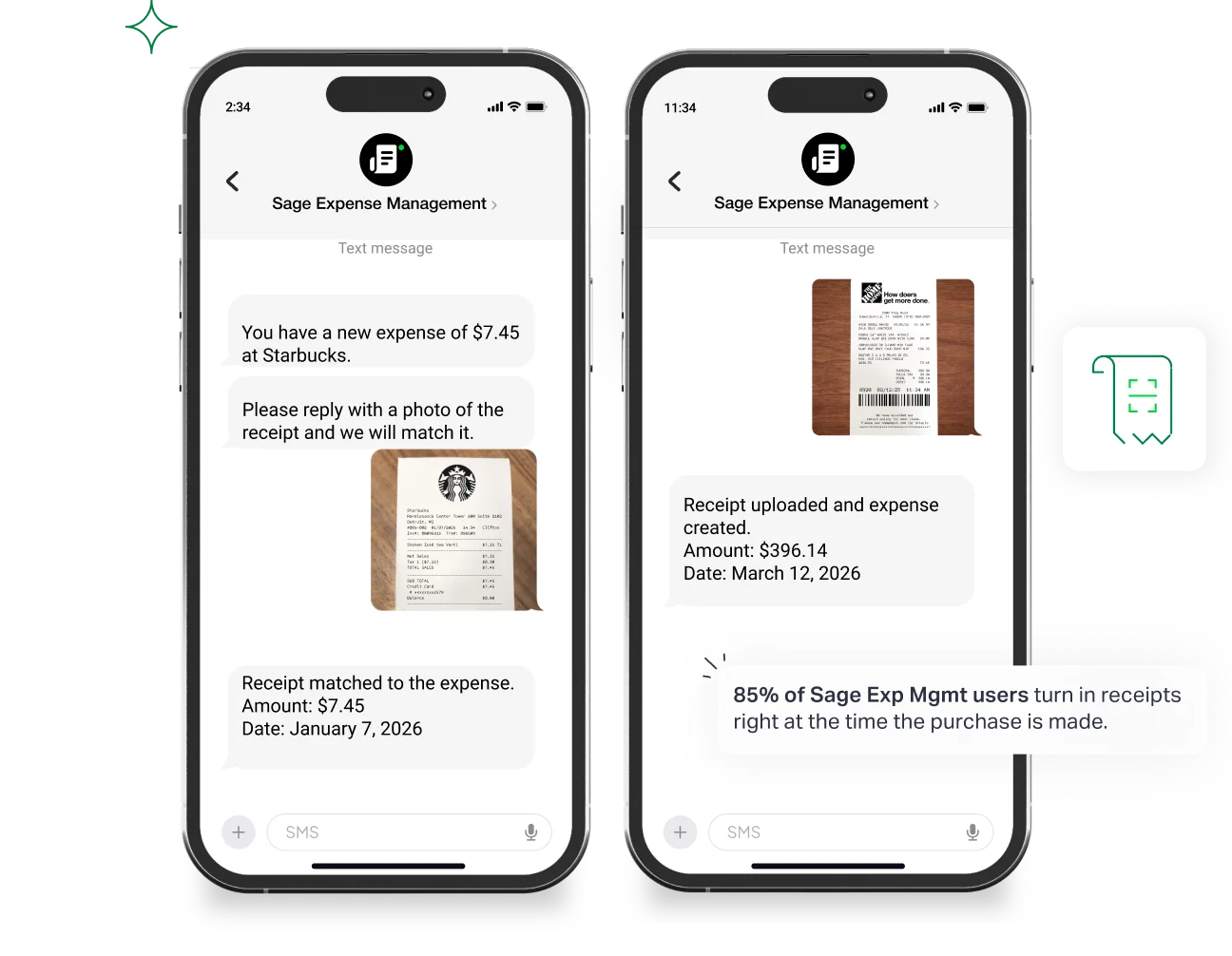
This means:
- Transactions are imported immediately
- No waiting for monthly statements
- No manual file uploads
- Continuous visibility into card spend
As soon as an employee swipes their corporate card, the transaction flows into the system automatically.
Automatic Receipt Matching
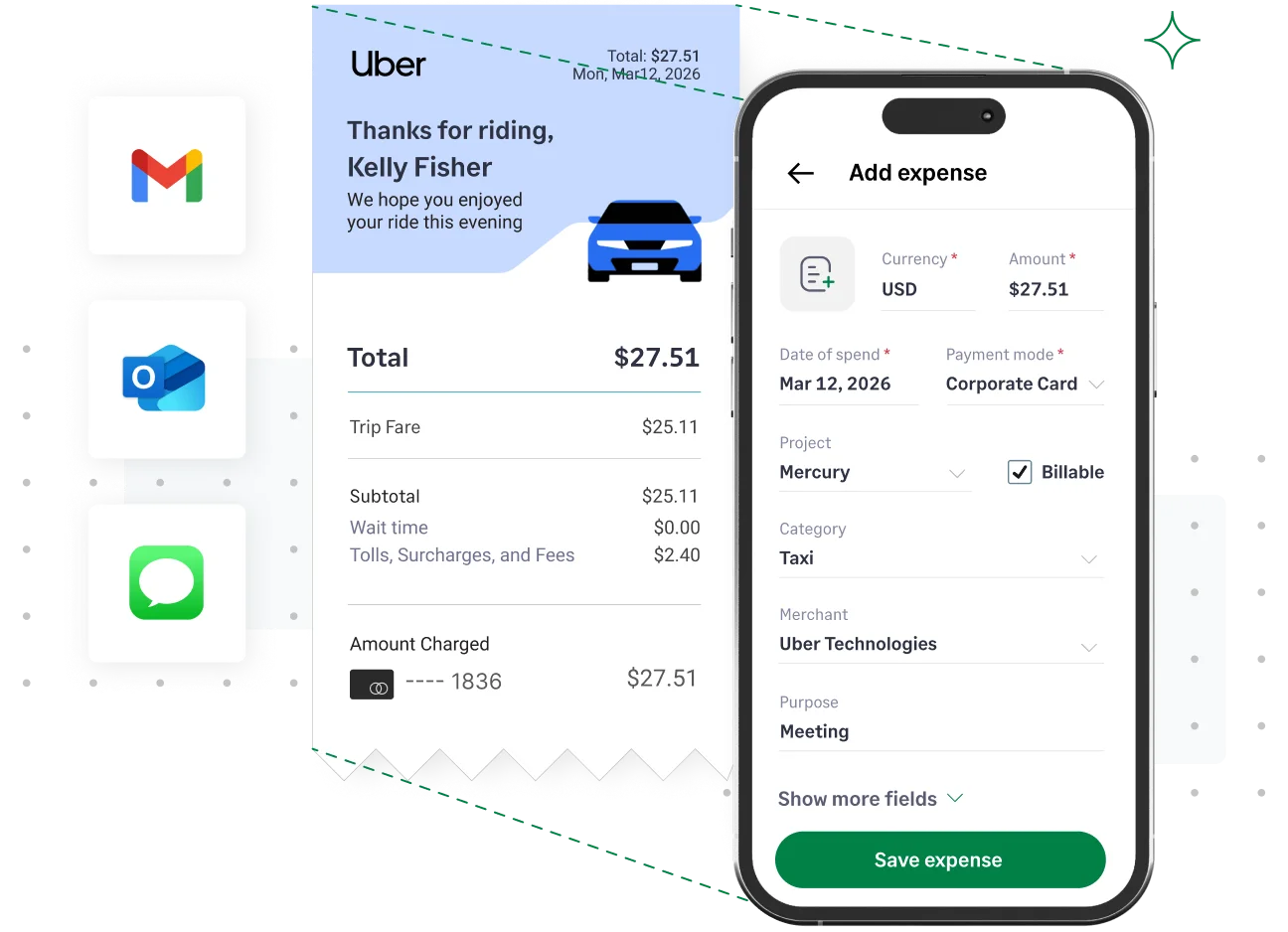
When an employee submits a receipt, Sage automatically matches the corresponding card transaction. Because the transaction data is already imported via real-time feeds, the system can pre-fill key details such as:
- Merchant name
- Merchant Code
- Transaction amount
- Currency
- Date
This eliminates manual data entry and ensures accurate matching between receipts and card transactions. The result is faster submission, fewer errors, and seamless reconciliation.
Policy Compliance and Multi-Level Approvals
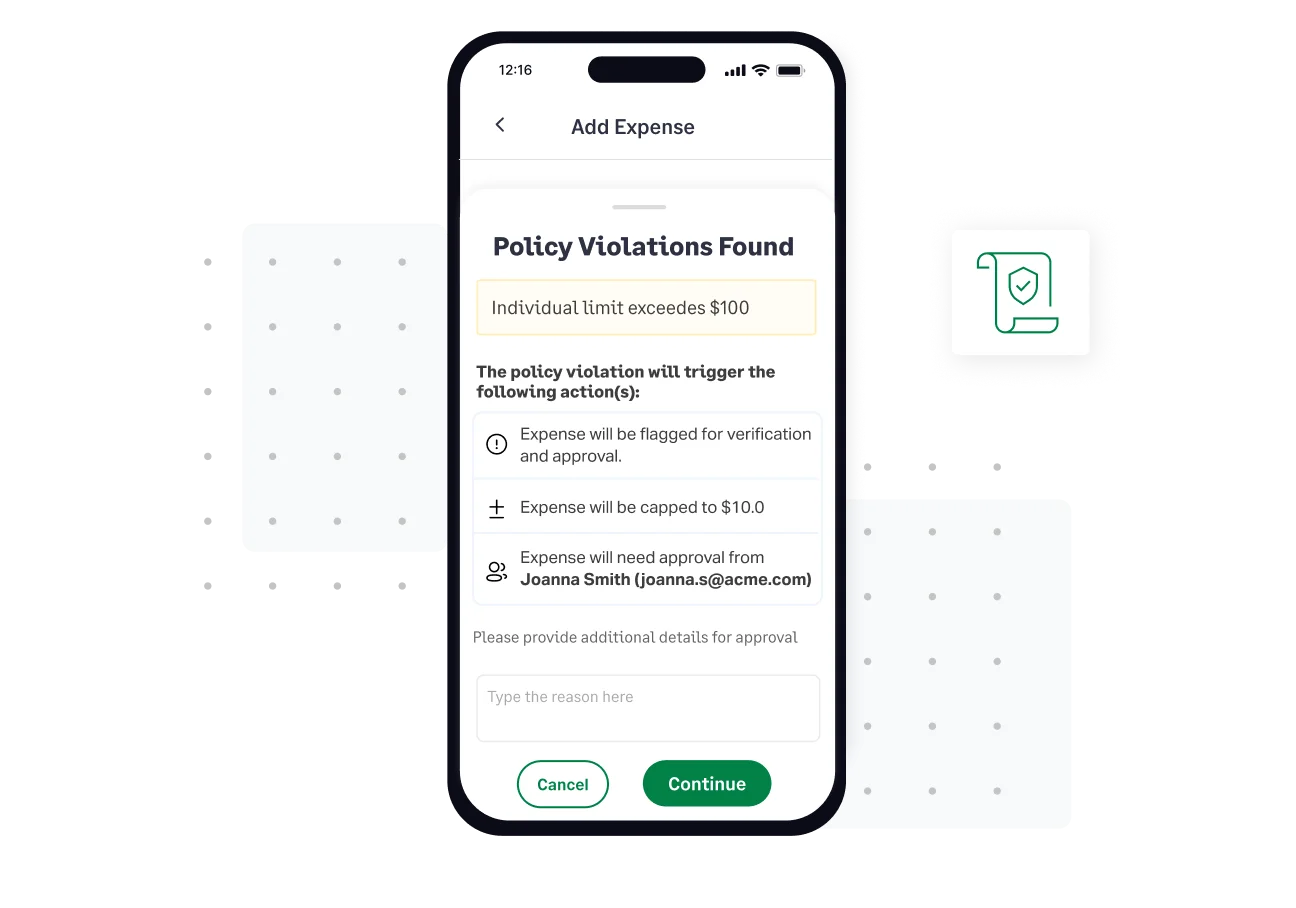
Once the receipt is submitted and matched, Sage expense management checks the expense against the organization’s predefined expense policies.
This can include:
- Category restrictions
- Spend limits
- Merchant-based rules
- Required fields or documentation
If the expense meets policy requirements, it moves forward in the approval workflow.
Multi-level Approvals can be configured based on company hierarchy, departments, cost centers, or custom rules, enabling single or multi-level approvals as needed. This ensures compliance without slowing down the process.
Seamless Accounting Integration
After final approval, Sage Expense Management automatically syncs approved expenses to your accounting software through seamless integrations.
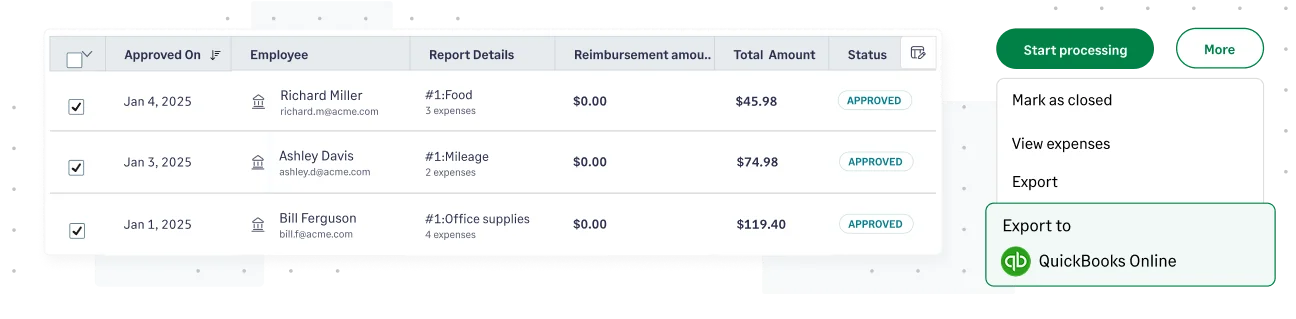
The export includes:
- Properly coded expense categories
- GL mappings
- Custom fields (if configured)
- Attached receipt documentation
Because the transaction was reconciled and validated earlier in the workflow, finance teams don’t need to re-check data during accounting sync. This streamlines the close process and maintains an audit-ready trail.
{{scobee-credit-card-reconciliation="/quote-banners"}}
From Reactive Matching to Real-Time Visibility
Corporate credit card reconciliation doesn’t have to revolve around statement cycles and manual matching. By moving to real-time transaction imports, automatic receipt matching and many such processes- finance teams can turn reconciliation into a continuous, automated process.
Instead of reacting at month end, organizations gain ongoing visibility, stronger compliance, and a faster close.
Automated credit card reconciliation is not just about saving time; it is about building a smarter, more controlled credit card workflow.
{{credit-card-reconciliation="/cta-banners"}}