Expense Categories
Books and Reference Materials

What expense category is Books and Reference Materials?

Learn what expense category Books and Reference Materials is for accurate accounting.
Last updated: October 29, 2025

See Why Top Teams Trust Sage Expense Management

G2 Crowd logoRating stars4.6/51670+ reviews

For professionals in fields such as law, accounting, medicine, or engineering, staying current requires access to a comprehensive library of technical books, journals, and reference materials. The costs of acquiring these resources are a necessary part of doing business, but their tax treatment depends entirely on their expected useful life.

The IRS has specific rules that determine whether a book is a currently deductible supply or a long-term asset that must be depreciated. This guide will clarify how to categorize these expenses to ensure your business remains compliant and maximizes its deductions.

Books and Reference Materials Category

The tax category for books and reference materials depends on how long they are expected to be useful to your business.

  1. Supplies (Currently Deductible): IRS Publication 535 states that you can deduct the cost of books, professional instruments, and equipment if you normally use them within one year. This applies to items like annual industry guides, journals, and magazine subscriptions.
  2. Depreciable Assets (Capitalized): If the usefulness of a book or set of reference materials extends substantially beyond the year they are placed in service, they are considered capital assets. Publication 535 is clear that these costs must be capitalized and recovered through depreciation.

Important Considerations When Classifying Books and Materials

The One-Year Rule

This is the primary test. If a reference material, such as an annual tax guide or a subscription to an online journal, is primarily useful for one year or less, its cost can be deducted as a current expense, typically under the category of Supplies.

Depreciating a Professional Library

If you purchase a comprehensive professional library (e.g., a multi-volume legal encyclopedia) or expensive reference books that will be used for many years, you must treat them as business assets. As outlined in IRS Publication 946, you would capitalize the cost and depreciate it over its recovery period, typically as a 5-year or 7-year property under MACRS.

Distinction from Education Expenses

It's essential to distinguish between general reference materials and books specifically purchased for a particular educational course. If you buy a book as a requirement for a seminar or class that qualifies as a deductible education expense, the cost of the book is part of your education expenses, not a separate supply or asset cost.

Tax Implications and Recordkeeping

The reporting for these costs depends entirely on their classification as either a current expense or a capital asset.

How to Report the Costs

For a sole proprietor filing a Schedule C (Form 1040):

  • Deductible Books/Subscriptions: These are reported under Part II, Line 22, Supplies.
  • Depreciation: The annual depreciation deduction for a capitalized professional library is calculated on Form 4562 and carried to Line 13 of Schedule C.

What Records to Keep

You must have documentary evidence to substantiate the cost of all books and reference materials. Your records should include:

  • Invoices or receipts from the bookseller or publisher.
  • For subscriptions, the service agreement and monthly or annual statements.
  • Proof of payment, such as canceled checks or credit card statements.

How Sage Expense Management (formerly Fyle) Automates Tracking for Books and Reference Materials

Sage Expense Management helps you accurately capture and categorize all your spending on professional resources, ensuring you have a complete record for tax time.
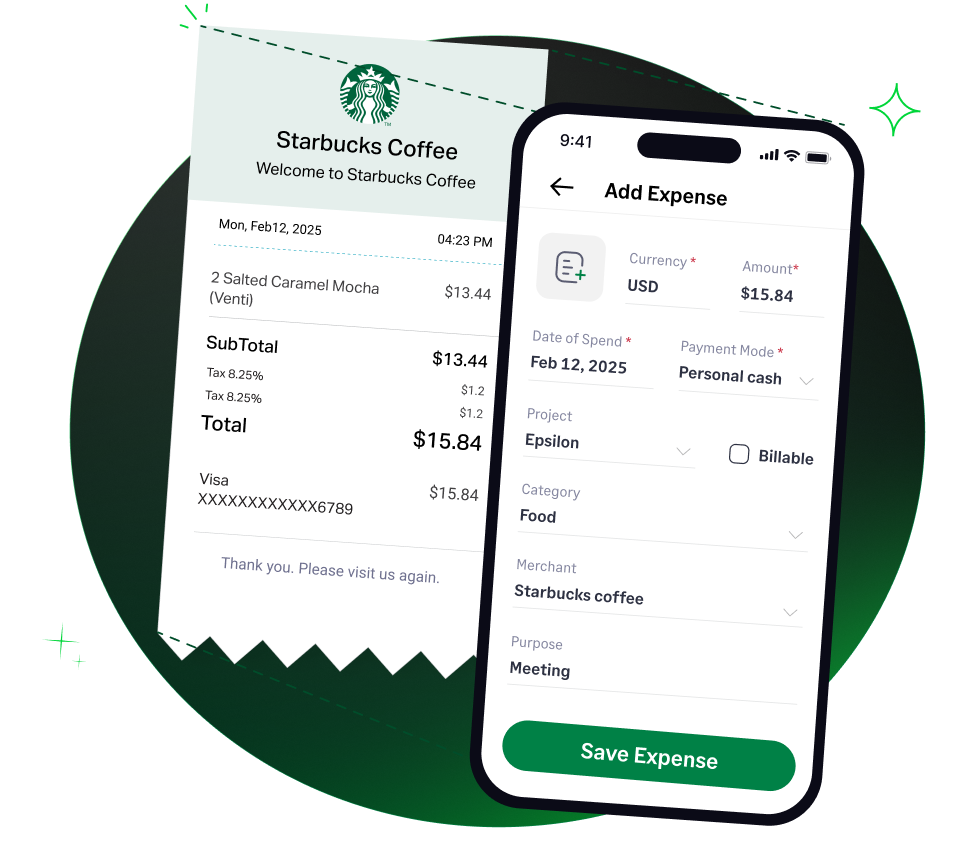
  • Capture All Purchases: Instantly capture receipts for books or subscription renewals using the our mobile app or by forwarding vendor emails.
  • Categorize for Correct Tax Treatment: Code expenses as Supplies for current deduction or as a Fixed Asset for capitalization and depreciation.
  • Centralized Subscription Renewals: Keep track of all your professional subscriptions and their renewal dates in one place.
  • Automate Your Accounting: Sync all categorized expenses to the correct GL account in QuickBooks, Xero, NetSuite, or Sage Intacct.

Expense Management That Works

Where You Work

Explore Sage Expense Management
Fyle app preview
TASA logo
101-500 Employees
Sage Expense Management has helped our Finance Department tremendously. We no longer have to chase after our employees for receipts and/or ask them to code their expenses. This has allowed us to redirect that time and energy to other aspects of our business.
Noemi Peña, Chief Financial Officer
While this article provides accurate information, it's not a substitute for professional, legal or financial counsel. Always seek advice from an attorney or financial advisor for advice with respect to the content of this article.
Learn more about Sage Expense Management software.

One manual coding error takes 18 minutes to fix

Reclaim up to 40 hours a month with our playbook

Thank you for downloading!

A copy of
this resource
 is waiting for you in your inbox. If you want to access it immediately, please click
here
.