Expense Categories
Restaurant Labor

What expense category is Restaurant Labor?

Learn what expense category Restaurant Labor is for accurate accounting.
Last updated: October 29, 2025

See Why Top Teams Trust Sage Expense Management

G2 Crowd logoRating stars4.6/51670+ reviews

For any restaurant, labor is a massive and critical expense, second only to the cost of food and beverages. The total of these two categories—Cost of Goods Sold (COGS) and labor, is known as the prime cost, the most important number for measuring a restaurant's profitability.

While restaurant managers must track labor costs by department (Front-of-House vs. Back-of-House) for internal analysis, the IRS has a simpler, unified category for tax purposes. This guide will clarify how to categorize all your labor costs according to IRS rules to ensure your business remains compliant and your financial reporting is accurate.

Labor Costs (Front-of-House vs. Back-of-House) Category

For tax purposes, there is no distinction between Front-of-House (FOH) and Back-of-House (BOH) labor. All payments made to your employees whether they are servers, hosts, chefs, or dishwashers, are categorized as Salaries and Wages.

This is a primary, deductible business expense. The FOH vs. BOH distinction is a crucial internal accounting practice for calculating your prime cost and managing profitability, but for the IRS, all employee compensation is treated as a single functional expense.

Important Considerations While Classifying Labor Costs

To correctly account for your total labor cost, you must include all forms of compensation and accurately separate employee wages from payments to independent contractors.

What's Included in Labor Costs?

As detailed in IRS Publication 535, deductible pay is not just hourly wages or salaries. It also includes other forms of compensation you give to your employees, such as:

  • Bonuses
  • Commissions
  • Certain fringe benefits

Employee vs. Independent Contractor

This is a critical distinction.

  • Employee (Wages): An individual whose work you have the right to direct and control. Their pay is a wage expense, and you are responsible for withholding and paying all employment taxes.
  • Independent Contractor (Contract Labor): An individual you hire for a specific job where you control only the result, not the means and methods of accomplishing it (e.g., a one-time guest chef or a freelance marketing consultant). As detailed in IRS Publication 334, payments of $600 or more to these individuals must be reported on Form 1099-NEC.

Employer's Share of Payroll Taxes

Your total deductible labor cost is more than just the gross wages you pay. The employer's share of payroll taxes—including social security, Medicare, and federal and state unemployment taxes (FUTA and SUTA)—is also a fully deductible business expense. However, these are not included in the "Wages" line.

Tax Implications and Recordkeeping

Properly accounting for labor costs means reporting wages and their associated taxes in their correct, separate categories.

How to Report the Deduction

For a sole proprietor filing a Schedule C (Form 1040):

  • The total gross wages and salaries paid to all employees (FOH and BOH) are reported on Part II, Line 26, Wages.
  • The employer's share of payroll taxes is reported on Part II, Line 23, Taxes and licenses.

What Records to Keep

You must maintain meticulous payroll records to substantiate your deductions. This includes:

  • Timesheets and payroll registers.
  • Copies of all payroll tax filings (like Form 941).
  • Copies of Forms W-2 issued to employees.
  • Proof of payment for all wages and payroll tax deposits.

How Sage Expense Management (formerly Fyle) Can Automate Expense Tracking

Sage Expense Management helps you manage and organize your labor-related data, providing a clear picture for both internal analysis and tax reporting.
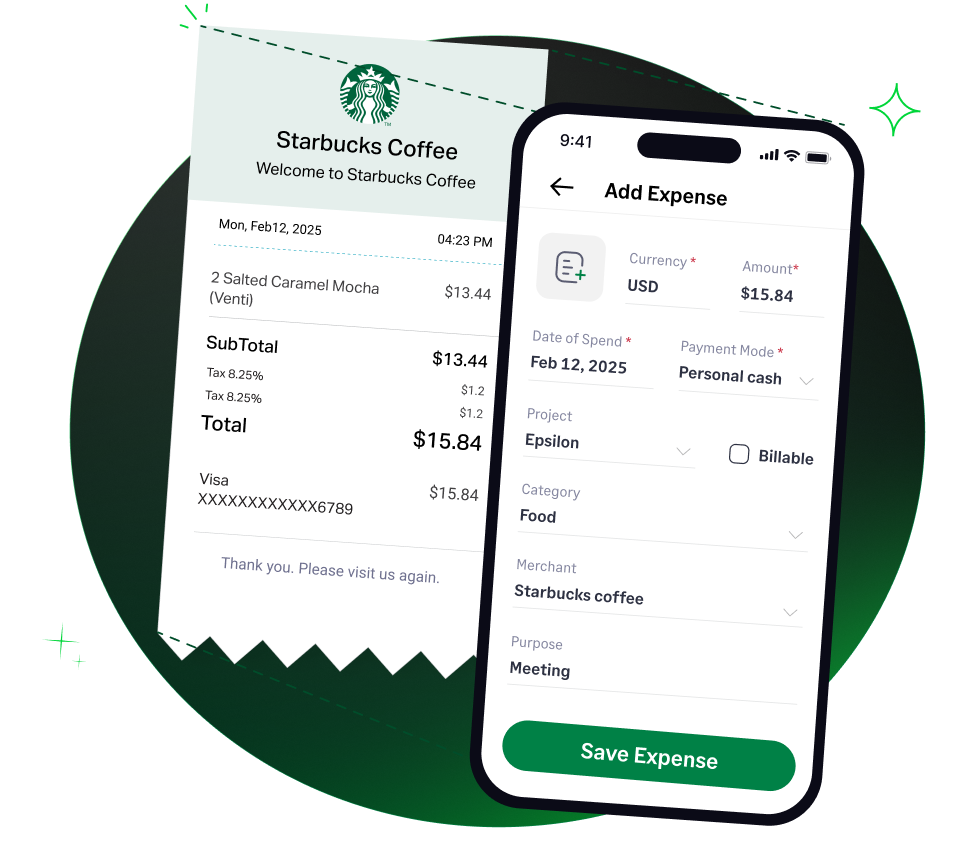
  • Centralize Payroll Reports: Forward your payroll reports from your provider directly to Sage Expense Management to keep them organized with other business expenses.
  • Track by Department: Code your labor costs by department (FOH, BOH) within our platform for accurate internal prime cost analysis.
  • Manage Employee Reimbursements: Use Sage Expense Management to track any out-of-pocket employee reimbursements that are separate from payroll.
  • Automate Your Accounting: We sync payroll data to the correct GL accounts in QuickBooks, Xero, NetSuite, or Sage Intacct for accurate bookkeeping.

Expense Management That Works

Where You Work

Explore Sage Expense Management
Fyle app preview
TASA logo
101-500 Employees
Sage Expense Management has helped our Finance Department tremendously. We no longer have to chase after our employees for receipts and/or ask them to code their expenses. This has allowed us to redirect that time and energy to other aspects of our business.
Noemi Peña, Chief Financial Officer
While this article provides accurate information, it's not a substitute for professional, legal or financial counsel. Always seek advice from an attorney or financial advisor for advice with respect to the content of this article.
Learn more about Sage Expense Management software.