4.6/51670+ reviews
Promotional items are tangible goods used to advertise a business, brand, or product. These items, which often feature a company's logo, are distributed to potential or existing customers to increase brand awareness and customer loyalty. Examples include pens, mugs, t-shirts, and other merchandise. From an accounting perspective, promotional items represent an expense related to marketing and sales efforts.
The accurate categorization of promotional item expenses is essential for several reasons. It allows financial controllers to maintain a clear understanding of marketing costs, budget effectively for promotional activities, and ensure compliance with financial reporting standards. It also aids in analyzing the return on investment (ROI) for marketing campaigns and allocating expenses appropriately within the marketing department, providing a detailed view of promotional spending.
This guide aims to provide financial controllers with a comprehensive explanation of how to accurately classify promotional item expenses. We'll also cover key accounting considerations relevant to these expenses and discuss the associated tax implications for businesses.
The most accurate way to classify promotional item expenses is as Marketing Expenses or Advertising Expenses.
IRS Publication 535 specifically allows for the deduction of advertising expenses, which supports classifying promotional items this way. Both classifications are accurate and acceptable. The choice depends on the level of detail in a company's accounting system.
It's important to avoid some common but potentially inaccurate expense categories when classifying promotional items, or to use them inconsistently. Here's a breakdown of why these categories are generally less preferred:
It's crucial to understand that while "Marketing Expenses" or "Advertising Expenses" are preferred, some companies might include promotional items in broader categories if applied consistently. However, consistency is paramount. A business should choose one classification method and apply it uniformly across all promotional item expenses to maintain accurate and comparable financial records.
To maintain accuracy and clarity in financial reporting, promotional item expenses should ideally be classified as Marketing Expenses or Advertising Expenses, used consistently.
When accounting for promotional item expenses, several factors come into play:
Tip: If promotional items are a significant part of a marketing campaign, allocating the expense over the campaign period can provide a more accurate view of marketing costs.
For companies with substantial marketing budgets, creating separate accounts for different promotional activities (e.g., promotional items - trade shows, promotional items - giveaways) might be beneficial.
Tip: Assess the materiality of promotional item expenses within your company's overall marketing budget. If it's a significant expense, detailed tracking will provide better visibility and control.
Promotional item expenses are typically allocated to the marketing or sales department, as they are directly related to those functions.
Tip: If different departments use promotional items for their specific needs, consider allocating the costs accordingly to provide a more accurate view of departmental spending.
Here are a couple of examples of promotional items and how they can be classified:
From a tax perspective, promotional item expenses are generally deductible business expenses, meaning they can be deducted from gross income to arrive at taxable income, as long as they meet the IRS criteria.
Note: There is a limit on how much you can deduct for gifts given to customers. IRS Publication 463 states that you can deduct no more than $25 for gifts you give directly or indirectly to each person during the tax year.
Tip: Promotional items with a clear business purpose are generally not considered gifts in the sense of the gift limit. The key is whether the item is primarily intended for advertising rather than personal use.
Promotional items are generally not amortized. The cost is usually deducted in the year the items are purchased or produced. Amortization applies to capital expenses, such as intangible assets with a useful life of more than one year.
However, if a company were to create a very large, custom-designed promotional item with a prolonged useful life (which is uncommon), amortization might be considered.
Additionally, accurate records of promotional item expenses are essential for supporting deductions and complying with IRS requirements. This includes:
IRS Publications 463 and 535 emphasize the importance of maintaining detailed records of business expenses.
Tip: Maintain clear records that demonstrate the business purpose of promotional items to avoid any questions during a tax audit.
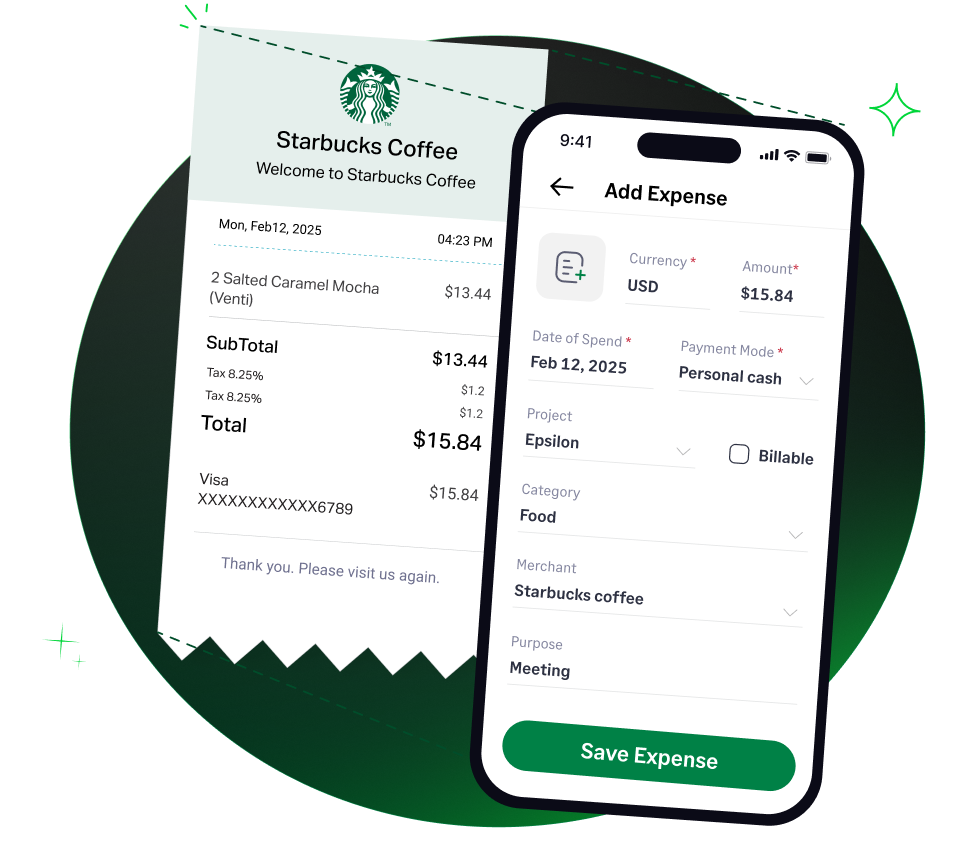
Sage Expense Management significantly simplifies the management and tracking of promotional item expenses, offering businesses enhanced efficiency, control, and valuable insights into their marketing and sales spending.
Here's a detailed explanation of how we help:
By automating and streamlining the management of promotional item expenses, Sage Expense Management empowers businesses to save time, reduce administrative overhead, and achieve enhanced visibility and control over their marketing and sales expenditures.
Promotional items are deductible as business expenses if they are both ordinary and necessary. An ordinary expense is one that is common and accepted in your industry, and providing promotional items is a common practice for many businesses to attract customers. A necessary expense is one that is helpful and appropriate for your trade or business; promotional items can be considered necessary as they help in marketing and advertising the business.
Promotional items can include a wide variety of items such as:
1. Items of nominal value distributed to employees for goodwill.
2. Free food and beverages distributed to the general public as a means of advertising or promoting goodwill in the community.
Yes, there can be limitations. For example, gifts to customers generally have a limit on how much can be deducted.
Expenses for promotional items are typically deducted as advertising or other business expenses on Schedule C (Form 1040) for sole proprietors or on the equivalent form for other business structures.