

Cost control is an essential process for any business looking to maximize profitability for long-term success. Keeping expenses in check ensures that businesses can stay competitive in their industries while being able to free up resources to reinvest in their growth. In today’s volatile economic environment, cost control has shifted from a "once-a-month" review to a real-time requirement. Waiting for the month-end close to identify overspending is no longer a viable strategy for businesses that want to stay agile.
This guide will explore the basis of cost control and effective strategies that businesses can implement to reduce their expenses without compromising quality or service.
What Is Cost Control?
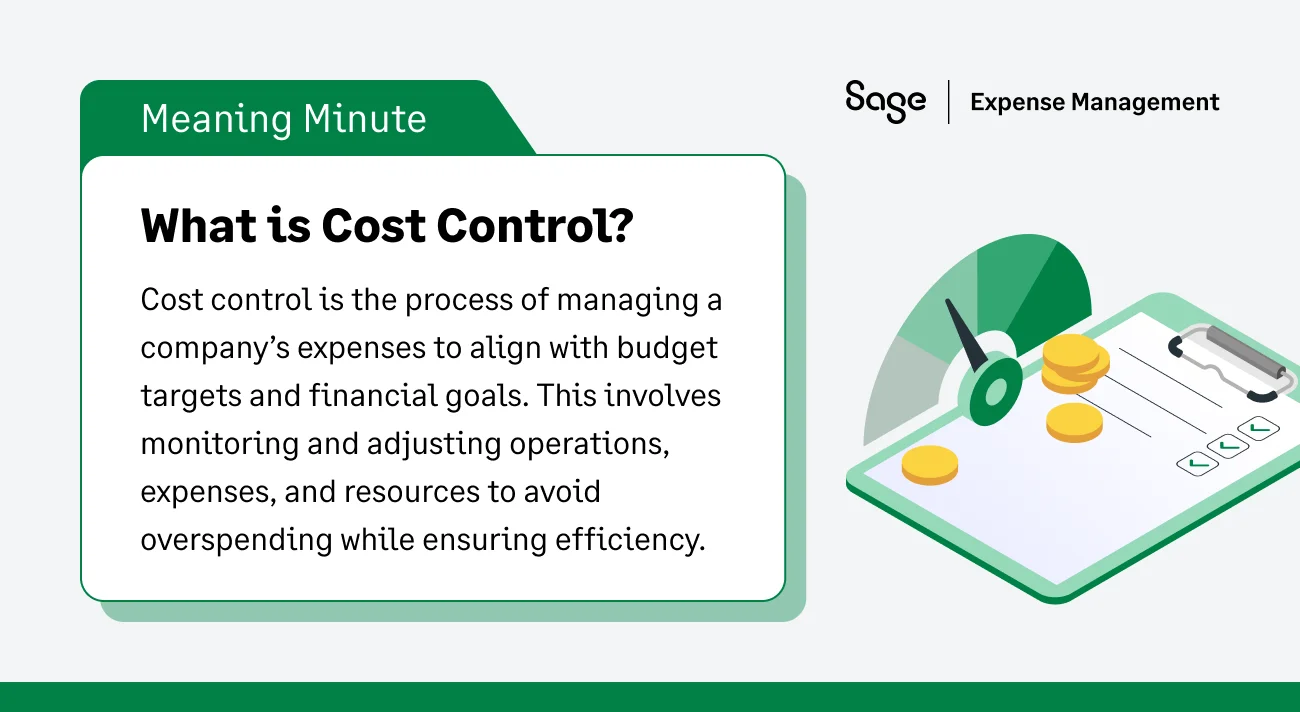
Cost control involves managing and regulating business expenses to meet financial goals. It involves monitoring, analyzing, and adjusting your operating expenses to ensure that they don’t exceed the allocated budget.
Please note that cost control is not the same as cost reduction; the latter focuses solely on cutting expenses, while cost control tries to ensure that even by reducing costs, you’re still aligned with financial goals.
Cost vs Expense
In accounting, a cost is the total outlay required to acquire an asset (like buying a piece of machinery). It represents a resource that hasn't been "consumed" yet.
An expense is a cost that has been used up in the process of generating revenue during a specific period (like monthly rent, utilities, or employee travel).
While a cost might stay on the balance sheet as an asset, an expense directly reduces your net income for the month.
Cost Control vs Cost Management vs Cost Reduction
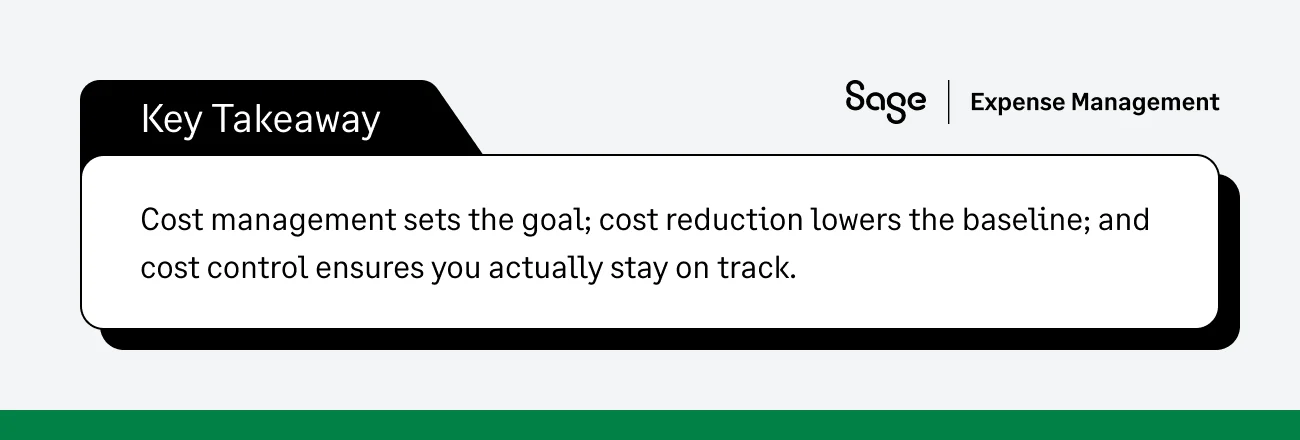
While these terms are often grouped together, they represent three distinct layers of financial strategy. Knowing the difference helps you move from simply "paying bills" to strategically managing your bottom line.
- Cost management: The broad, "big picture" strategy. It covers the entire lifecycle of business spending - from initial planning and resource estimation to long-term budgeting and financing. It’s the roadmap for your company’s financial future.
- Cost control: The tactical, day-to-day execution. This is the active process of comparing actual spending against your budget and taking immediate corrective action if costs begin to drift. Management is the plan; Control is the enforcement.
- Cost reduction: A reactive, targeted effort to lower specific expenses. It’s often a one-time activity (like renegotiating a vendor contract) aimed at immediate savings. While reduction cuts the price tag, control ensures those costs don't creep back up over time.
Direct vs. Indirect Costs
To control costs effectively, you must first categorize them. High-growth businesses typically distinguish between:
- Direct Costs: These are expenses tied directly to the production of a product or service, such as raw materials or direct labor. These are often easier to track but can fluctuate with sales volume.
- Indirect Costs (Overhead): These are the "hidden" costs of doing business - rent, utilities, and administrative software. Controlling these is often the fastest way to improve net income without affecting the core product.
The Basics of Cost Control
Here are some of the basics of cost control you’d need to understand to implement your strategies effectively:
- Target Net Income: Helps businesses set income goals based on expense estimates, thereby providing a benchmark for financial planning.
Target Net Income = Sales - Fixed Costs - Variable Costs
- Identifying Cost Drivers: Have a clear understanding of what’s driving your expenses, be it labor, materials, or overhead.
- Fixed vs. Variable Costs: Separate your fixed costs (rent, salaries) from variable costs (supplies, utilities) so you can manage them differently.
{{employer-compensation-cost="/did-you-know-cards"}}
Source: (U.S. Bureau of Labor Statistics)
Why Is Cost Control Important for Businesses?
Cost control is critical for businesses to maintain a healthy profit margin. Unchecked expenses can often eat into profits and threaten a business’s sustainability. Having effective cost control measures in place ensures that you can operate efficiently, reinvest in key areas, and remain competitive.
Here are three main ways in which cost control helps businesses:
- Improved profitability: Helps reduce unnecessary spending, leading to a higher net income.
- Operational efficiency: Streamlining processes ensures your resources are better utilized.
- Financial flexibility: Having a guardrail on costs ensures there’s always room for reinvestment and growth.
Benefits of Cost Control
The primary benefit is protected profit margins, but it also leads to significantly improved operational agility. When a company has total visibility into its spend, it can reallocate resources to growth areas much faster.
Additionally, effective cost control reduces audit risk by ensuring a clean, automated paper trail for every transaction.
Business Costs You Can Control
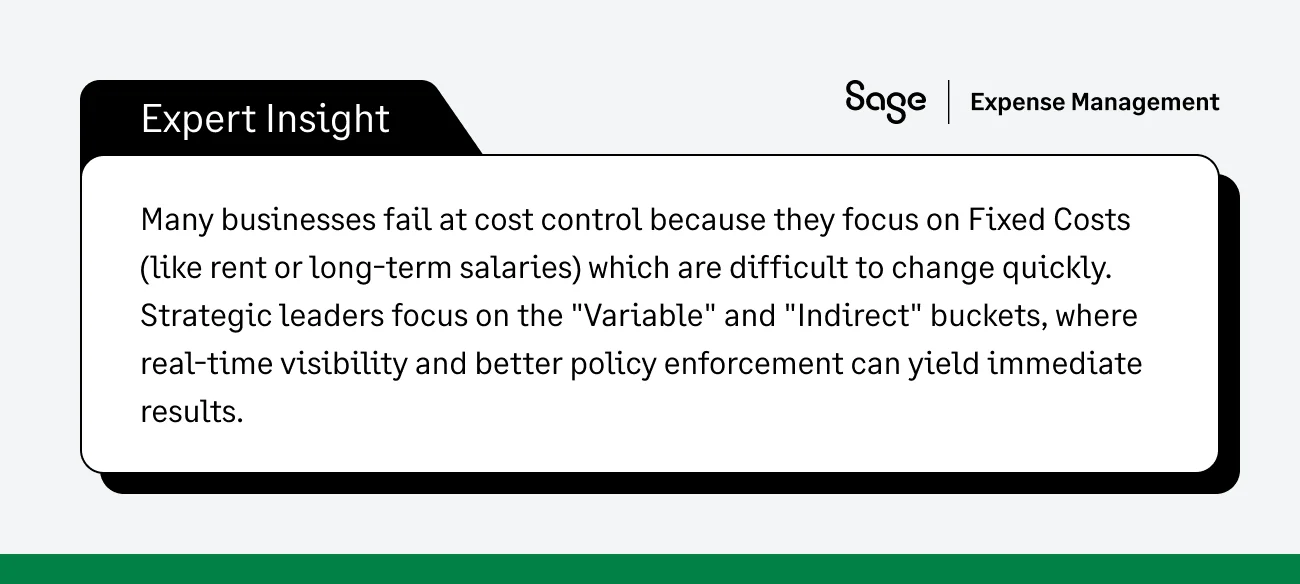
To manage a budget effectively, you have to know which levers you can actually pull. In accounting, costs are generally split into two categories: those that are "baked in" and those that are flexible.
Variable costs
These are costs that fluctuate based on your business activity, such as raw materials, shipping fees, and travel expenses. Because of these scales with production or sales, they are the primary targets for cost control.
For example, using a system that flags out-of-policy travel spend in real-time allows you to manage these costs before they balloon.
Indirect costs
Often called overhead, these include utilities, office supplies, and software subscriptions. While these don't directly produce your product, they can quietly erode profit margins.
Controlling "Shadow IT" - duplicate or unused software seats - is one of the fastest ways to lower indirect costs without affecting operations.
Discretionary spend
These are non-essential costs like employee perks, marketing experiments, or professional development. While vital for culture and growth, they offer the most flexibility during a "cost control" phase because they can be scaled back or paused without immediate operational failure.
Common Cost Estimation Techniques
Parametric estimation
This technique uses statistical modeling to scale costs based on specific units of work. For example, a construction firm might estimate a project based on a cost per square foot, while a SaaS company might estimate customer acquisition based on cost per lead.
It is highly reliable for standardized, repetitive tasks where the relationship between variables is well understood.
Bottom-up estimation
Often considered the "Gold Standard" for accuracy, this method involves breaking a project down into its smallest individual tasks and estimating each one separately. Those costs are then rolled up to create the total budget.
While time-consuming, it aligns perfectly with Zero-Based Budgeting, as it forces managers to justify every line item from the ground up rather than relying on high-level guesses.
Analogous estimation
Also known as "Top-Down" estimation, this method uses the actual cost of a previous, similar project as the basis for the current one. It is the fastest way to get a "ballpark" figure during the early stages of planning.
However, its accuracy depends entirely on how closely the past project mirrors the current one and whether you’ve adjusted for current market inflation.
Common Challenges of Cost Control
Even for experienced finance teams, cost control is a moving target. Bridging the gap between a theoretical budget and the reality of daily spending involves several operational hurdles:
The fragmentation of data sources
Relevant financial data rarely lives in one place. It flows in from sources. Aligning this data into a single, usable format requires significant manual effort and organization, often leading to errors before the analysis even begins.
Accommodating "scope creep"
As projects evolve, goals and features often change. Because cost control relies heavily on predicting future expenses, a shift in project scope can render a previous budget obsolete, forcing the finance team to rebuild their controls on the fly.
The "cost of cost control"
Implementing a control system can be incredibly time-consuming. From manual data collection to the "data massaging" of CSV files, the labor cost of tracking your expenses can sometimes rival the very overages you are trying to prevent.
Mistaking accounting for control
Many businesses treat cost control as a post-spend accounting task. However, true control requires going deep into the project lifecycle and planning out funding before the spend occurs.
The 48-hour visibility blind spot
If your software relies on legacy bank feeds, you are looking at data that is 1–2 days old. This lag prevents immediate corrective action, turning cost control into a reactive "clean-up" exercise rather than proactive management.
9 Cost Control Methods Business Can Implement
Here are nine practical methods businesses can use to control costs effectively:
Zero-based budgeting (ZBB)
A clear and well-defined budget provides your business with a financial roadmap. Beyond traditional budgeting, many firms are adopting Zero-Based Budgeting, where each expense must be justified from scratch for every new period.
This prevents "budget creep" - the tendency for unnecessary subscriptions to stay on the books simply because they were paid the previous year.
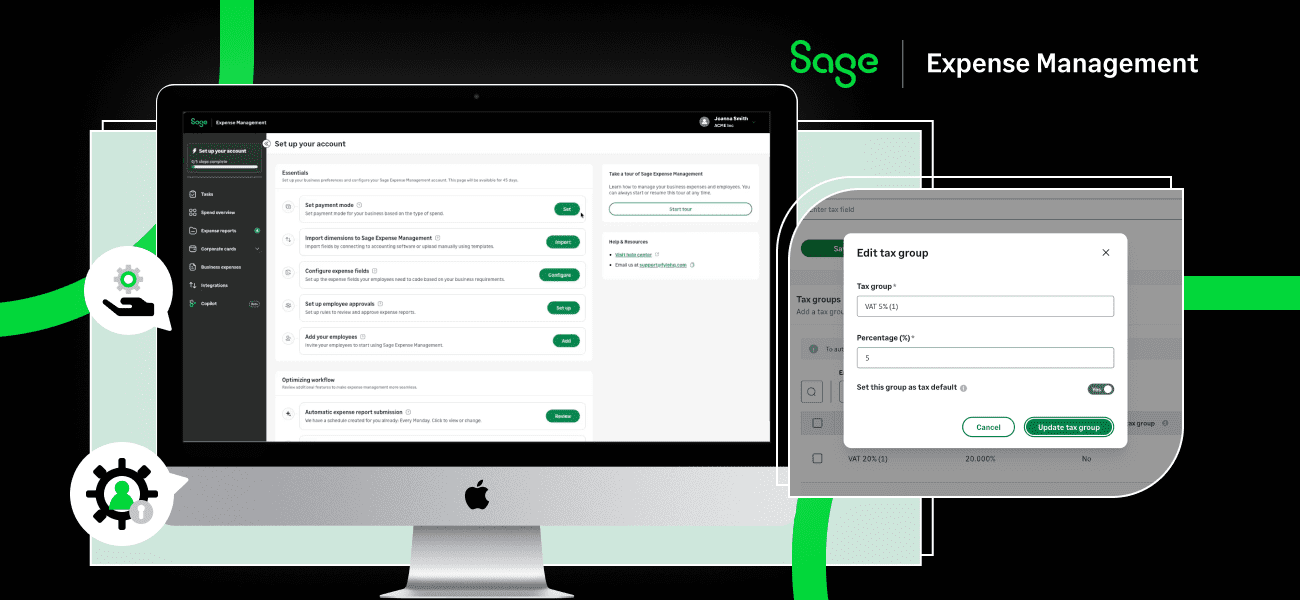
To make ZBB effective, SEM allows you to set these budgets at a granular level. You can now create specific spending limits across Departments, Projects, or Categories, ensuring that every dollar justified in your budgeting process is tracked against its intended purpose in real-time.
Real-time expense tracking
Tracking your business expenses in real time can help avoid overspending. For instance, tools like Sage Expense Management (SEM) integrate directly with credit card networks to give you real-time notifications on all business credit card spend.
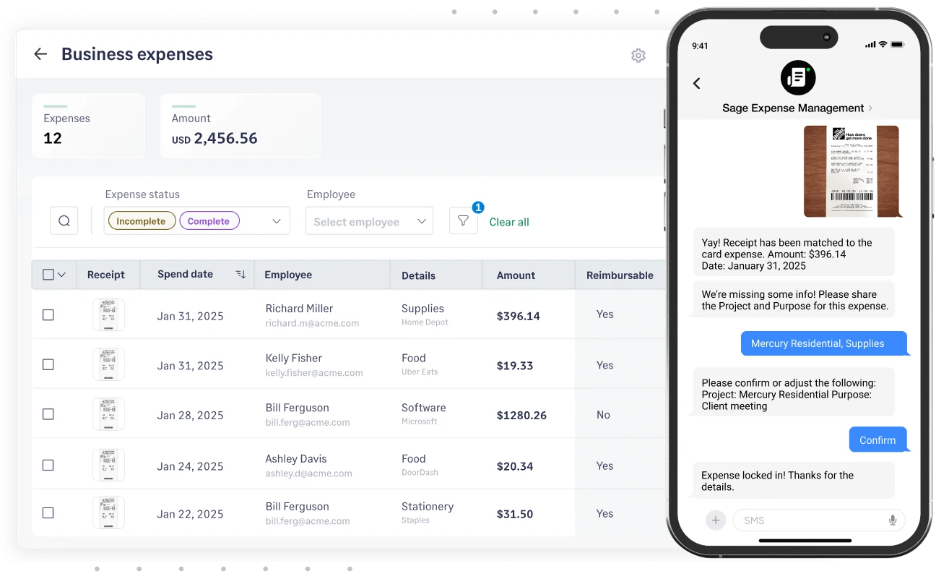
This ensures you have instant visibility on all employee spending and are always aware of company-wide spending.
Identify and eliminate unnecessary spending
Evaluate all your expenses regularly to identify those that no longer serve your business. By auditing merchant spend to identify duplicate services (like paying for three different project management tools), you can consolidate subscriptions and negotiate better enterprise rates.
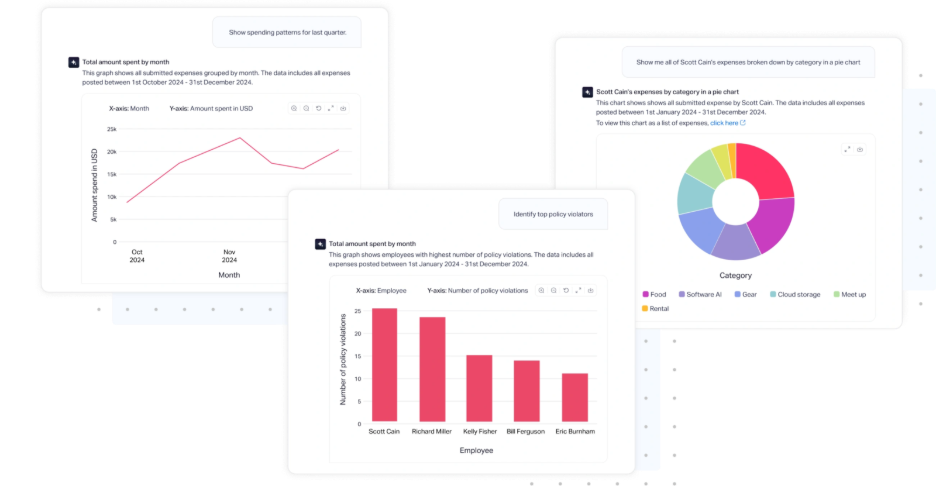
With Sage Expense Management's AI Copilot, you can examine your business credit card and reimbursable spending patterns, compare them across different time frames, and gain valuable AI-driven insights that guide you toward more informed decision-making, all through simple queries.
Improve operational efficiency
Streamline all your existing workflows to reduce wasted time and resources. Automation is key here, especially in areas like invoicing, expense management, inventory management, and payroll processing.
Outsourcing and freelancing
You might not always need full-time staff for every role in your organization. Consider outsourcing specific tasks or hiring freelancers.
This is because it’s more cost-effective to bring in freelancers or contractors for specific tasks rather than adding a permanent staff member, which could cost businesses between $4,000 to $20,000 before even factoring in salaries (Indeed).
{{avg-cost-of-adding-employee="/did-you-know-cards"}}
Source: Shopify
Energy efficiency
Invest in energy-efficient technology or similar initiatives to help reduce utility costs in the long run. For instance, switching to LED lighting, reducing water consumption, or even using renewable energy can create lasting savings.
Inventory management
Mismanaging your inventory can lead to high holding costs or stockouts. Implement a just-in-time inventory to optimize your supply chain and reduce excess stock.
Vendor negotiations
Review your vendor contracts regularly to negotiate better deals or try switching to a cost-effective supplier. Remember that long-term relationships with vendors may also lead to volume discounts.
Employee costs
Balancing your employee’s morale along with labor costs is a fine line. Introduce flexible work hours, offer remote or hybrid work, and optimize staffing levels to maintain productivity while reducing overhead.
{{bureau-of-labor-statistics="/did-you-know-cards"}}
Best Practices for Cost Control
Effective cost control is less about drastic cuts and more about building a culture of financial discipline supported by the right technology. Here are the industry best practices for maintaining a healthy bottom line:
- Establish granular baseline budgets: You cannot control what you haven't defined. Instead of a single "Company Travel" budget, break it down by Department, Project, or Region. This level of detail allows you to identify exactly where a leak is happening without halting operations for the entire company.
- Prioritize real-time visibility: Moving away from "statement-based" tracking is the most significant upgrade a finance team can make. This allows you to intervene right away if a budget is blown, rather than finding out three weeks later when the credit card statement arrives.
- Automate compliance at the source: Human error and "forgetfulness" are major cost drivers. Use tools that automatically prompt employees for receipts immediately after a purchase. When compliance is easy and instant, you eliminate "ghost spend" and reduce the labor costs associated with month-end reconciliation.
- Audit for duplicates and redundancy: Perform a quarterly audit of your merchant spend. Look for duplicate software subscriptions or services being paid for across different departments.
- Implement proactive threshold alerts: Don't wait for a budget to hit 100% before taking action. Set automated alerts at 50% and 80%. These serve as an "early warning system" for project managers, allowing them to adjust their spending pace before they actually run out of funds.
- Focus on the data mapping efficiency: Evaluate how much time your finance team spends on manual data entry. If your controllers are spending hours every week mapping transactions to GL codes, your cost control process is too expensive. Automation should handle the mapping of data, so your team can focus on the analysis that actually drives savings.
Proactive Cost Control with Sage Expense Management

Sage Expense Management bridges the gap between theoretical budgeting and the reality of daily spending. By connecting directly to the Visa, Mastercard, and Amex networks, it eliminates the 48-hour visibility gap typical of legacy systems.
The moment an employee swipes their card, the transaction is visible to finance, and the spender is instantly prompted via SMS to capture the receipt. This real-time data flow ensures that cost control isn't just a post-mortem reporting task, but an active, preventative strategy.
The platform’s recently upgraded Budgets feature takes this control even further by empowering both admins and spenders to stay within financial guardrails:
Democratic spend visibility
Admins can now choose to share high-level budget data with all contributing employees or specific team members. This allows spenders to see exactly how much of a project or department budget remains in real-time, enabling them to make informed decisions before they swipe.
Crucially, privacy is maintained: employees see the "Progress Bar" of the overall budget without seeing the granular expense details of their peers.
Operational agility for admins
Admins can edit budget details - such as adding a forgotten "Train" category to a Travel budget - even after the budget is live.
With the addition of One-time budget frequencies alongside Monthly, Quarterly, and Yearly options, the system reflects how businesses manage project-based spend.
Enhanced audit and monitoring
The new Spend Overview page includes a dedicated Budget Status column and quick filters for faster tracking of at-risk budgets.
Furthermore, admins can now access Historic Budget Usage to compare past performance and Export Budget Data directly for deep-dive analysis or stakeholder reporting.
By automating the data mapping and providing clear, proactive notifications at 50%, 80%, or 100% of a budget, Sage Expense Management ensures your finance team stays focused on strategic growth rather than manual oversight.
In Conclusion
Cost control is an ongoing process that requires thoughtful planning, regular monitoring, and the use of efficient tools. From budgeting to real-time expense tracking, businesses can implement several strategies to optimize their costs.
With tools like Sage Expense Management, businesses gain better visibility into their spending, ensuring they remain agile and financially healthy in an ever-changing market.
{{control-costs-in-rearview="/cta-banners"}}