


SAP Concur is a giant in the travel & expense management space, but its complex features are built for massive, global enterprises. Today, a growing number of SMBs and mid-market teams are actively seeking alternatives to escape Concur’s notoriously high costs, rigid workflows, and sluggish customer support.
If you’re ready to transition to a more intuitive and cost-effective platform, this guide breaks down the top SAP Concur competitors for 2026. We’ll dive into their key features, pricing, and unique benefits to help you find the perfect fit for your finance team.
At a Glance: Top SAP Concur Alternatives Compared
Replacing a legacy system is a big decision. Here is a quick breakdown of how the top alternatives stack up against Concur.
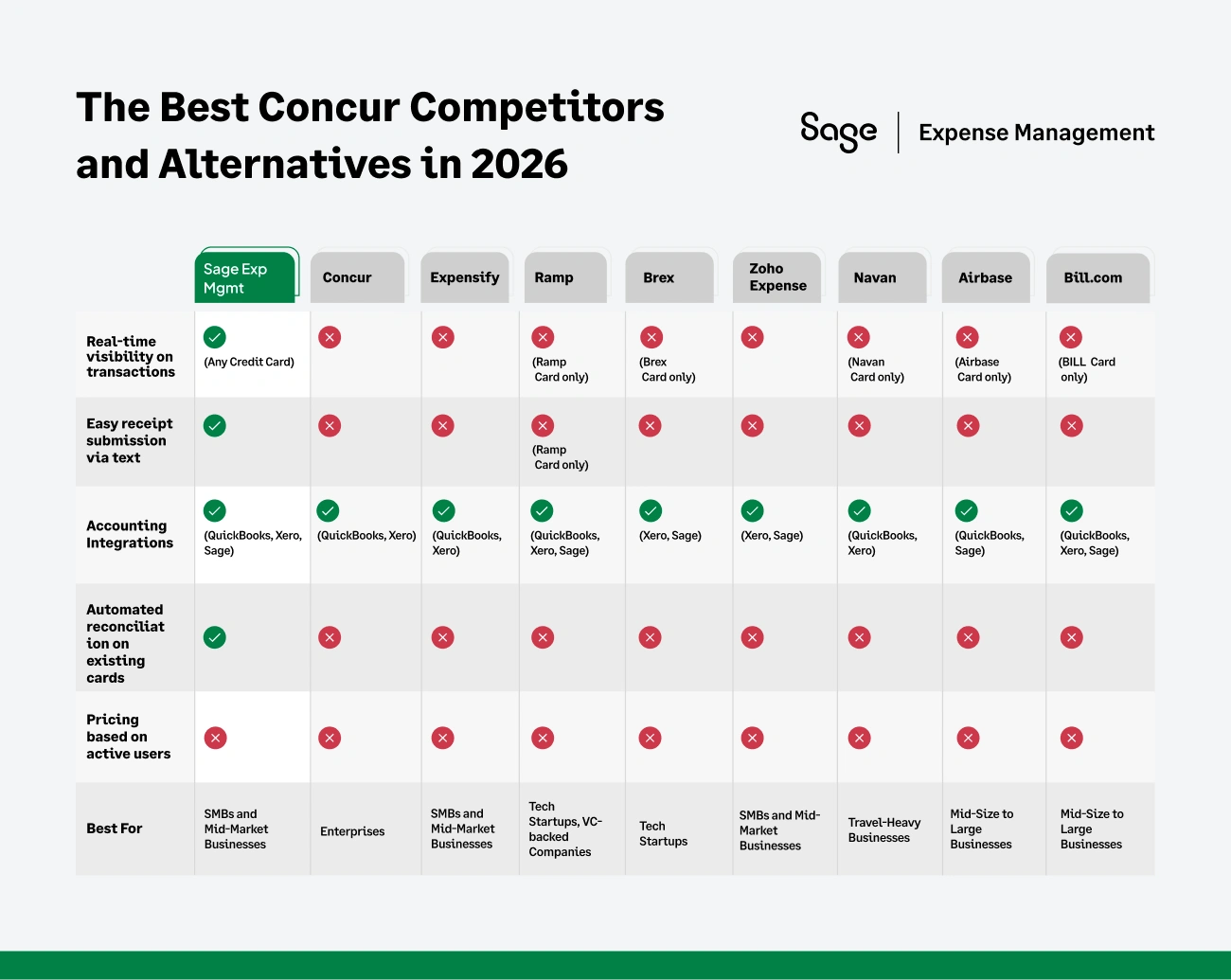
Why Businesses Look for Concur Alternatives
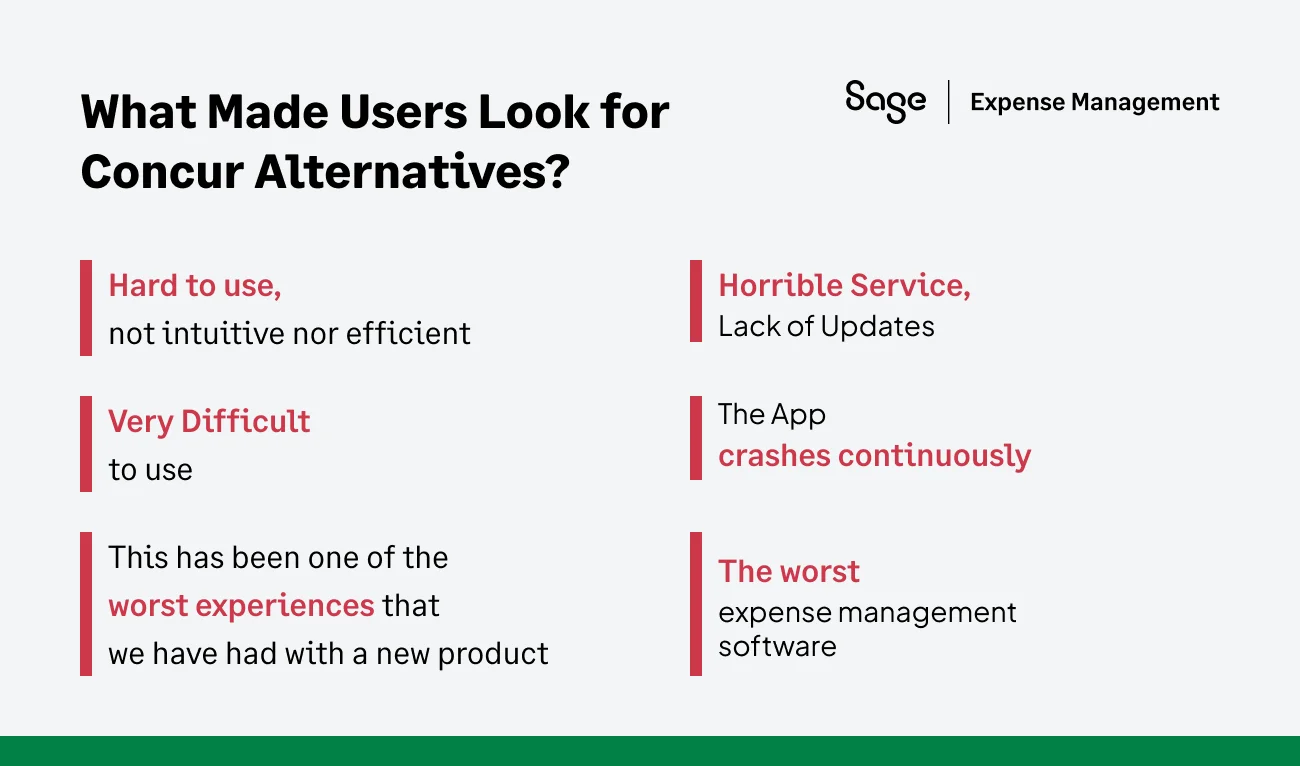
While Concur offers a wide range of functionalities, it frequently falls short in addressing crucial business pain points. This has prompted many companies to explore alternatives that better align with their operational efficiency and financial prudence. Here are some of the most common reasons driving this search for alternatives:
1. Complex User Interface
Concur's user interface is often criticized for being outdated, clunky, and unintuitive. Both employees and finance teams encounter difficulties in navigating the system, leading to frustration, increased training time, and delays in expense report submissions and approvals.
This complexity also contributes to a higher learning curve, reducing overall productivity. Streamlined, modern interfaces offered by alternatives prioritize user experience, leading to faster adoption and greater efficiency.
2. The Hidden Costs: Pay-Per-Report & Support Fees
Concur's pricing model is primarily tailored to the budgets of large enterprises, but the way they charge is a major pain point. Instead of a flat subscription fee, Concur often charges businesses on a pay-per-report basis.
{{concur-pricing="/did-you-know-cards"}}
3. The Disconnect Between Corporate Cards and Expenses
Concur relies on legacy bank card feeds to import transaction data. This means they wait for your bank to post the transaction, which typically delays the data by 24 to 72 hours. This lack of real-time data synchronization requires finance teams to spend excessive time chasing missing receipts at month-end and manually matching transactions.
4. High Costs for SMBs
Concur's pricing model is primarily tailored to the needs and budgets of large enterprises. This makes it a prohibitively expensive solution for SMBs and even many mid-market companies.
These growing businesses are often seeking more budget-friendly alternatives that deliver essential expense management features without imposing a significant financial burden. Alternatives that offer scalable and transparent pricing are highly valued.
5. Slow Customer Support
Many businesses have reported experiencing slow response times and a lack of personalized support from Concur's customer service team. This can result in considerable delays in resolving critical issues, disrupting financial operations, and negatively impacting employee productivity.
6. Limited Flexibility & Customization
Concur's system often exhibits limited flexibility when it comes to customizing approval workflows, integrating with other business applications, and creating custom fields to capture specific data.
Businesses with unique or evolving needs often find Concur's rigid structure restrictive and unable to adapt to their specific requirements. Alternatives that offer greater customization capabilities are favored for their adaptability.
7. Manual Credit Card Reconciliation
Concur's credit card reconciliation process can be time-consuming, labor-intensive, and prone to errors. The lack of real-time data synchronization and automated reconciliation necessitates finance teams to spend excessive time chasing down missing receipts, manually matching transactions, and correcting discrepancies. This manual effort can lead to inaccuracies and delays in closing the books.
This manual effort can lead to inaccuracies and delays in closing the books. Learn more about how this time-consuming reconciliation process affects your business.
Reasons to Consider Concur Alternatives
The shift towards Concur alternatives is fueled by the pursuit of solutions that offer:
- Better User Experience: This translates to faster approvals, reduced manual effort, and increased employee satisfaction.
- Lower Costs: Affordable options designed for SMBs and mid-market businesses provide greater value and ROI.
- More Flexibility: Customizable workflows and seamless integrations enable businesses to tailor the solution to their specific needs.
- Real-time Transaction Feeds: Automated matching and instant visibility into spending improve accuracy and control.
Sound familiar? If you're nodding along, it's time to explore the top Concur alternatives of 2026.
We've listed them based on flexibility, integration, automation, and user experience to help you find the perfect solution for your business.
The Top 8 Concur Competitors and Alternatives in 2026
1. Sage Expense Management (formerly Fyle)
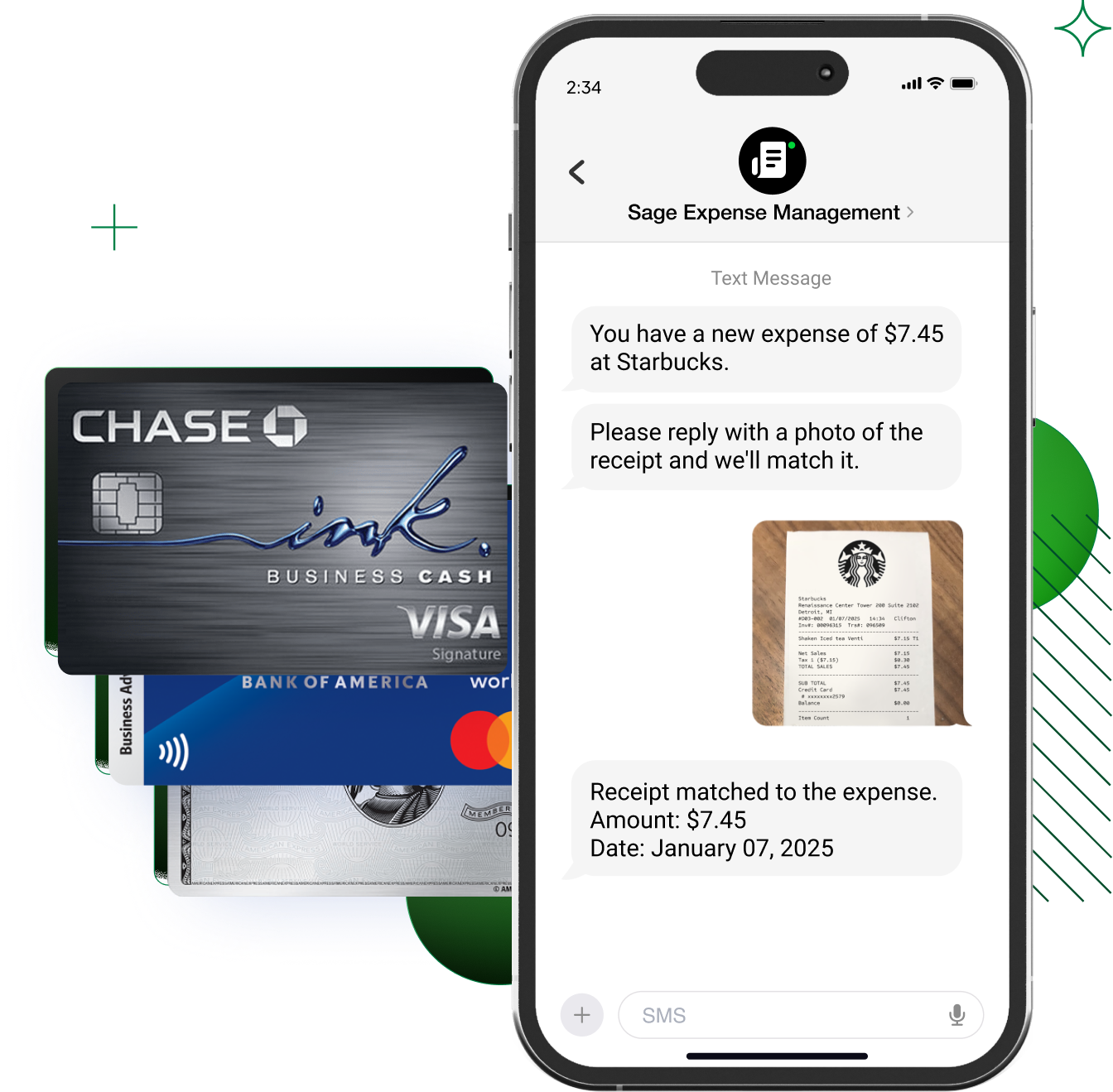
Sage Expense Management is designed to eliminate the inherent inefficiencies associated with traditional tools like SAP Concur.
Specifically built to cater to the needs of SMBs and mid-market companies, Sage Expense Management delivers real-time transaction feeds, seamless accounting integrations, and intuitive workflows that dramatically reduce manual effort and streamline the entire expense management lifecycle.
Who is it for?
- Target ICP: Growing mid-market organizations and SMBs seeking agile, real-time expense management without the switching burden of corporate credit cards.
- The users: Finance and accounting teams looking to accelerate their month-end close via direct bank feeds, along with staff members who prefer submitting expenses instantly via text or other messaging platforms.
Key Features
- Real-time Credit Card Feeds
Unlike Concur, which relies on delayed "Bank Card Feeds," Sage Expense Management connects directly to your credit card networks. You get instant transaction data the second a card is swiped, eliminating manual entry and accelerating reconciliation.
{{gartner="/quote-banners"}}
- AI-powered Receipt Management
Concur heavily markets its "Joule AI," but that AI relies on 3-day-old bank data. Sage Expense Management’s AI auto-extracts data directly from receipts (via text, email, or Slack) and matches it to real-time transactions, instantly eliminating manual verification.
- Customizable Multi-level Approval Workflows
Sage Expense Management’s flexible workflows ensure expenses are reviewed and approved by the right people. Unlike Concur’s rigid structures, this system adapts to business-specific approval processes.
- Seamless Accounting Integrations
Sage Expense Management integrates effortlessly and quickly with QuickBooks, Xero, Sage, and other platforms without the need for expensive third-party IT consultants.
- Superior Customer Support
Sage Expense Management offers faster, more personalized customer support compared to Concur. With 24/7 human availability, businesses get real-time assistance.
Pricing
Starts at $11.99 per active user/month, billed annually. No hidden fees or forced card requirements.
Why people prefer Sage Expense Management over Concur?
- Faster Implementation: The intuitive design leads to a quick and easy setup process, minimizing disruption.
- Real-time Data Sync: Ensures accurate credit card reconciliation and robust policy compliance on the cards you already own.
- Transparent Costs: A predictable, active-user pricing model rather than Concur's unpredictable pay-per-report fees.
{{expensify-concur="/cta-banners"}}
2. Expensify
Expensify is a cloud-based expense management software designed to automate the process of receipt scanning, expense reporting, and reimbursement. It's particularly well-suited for small teams, startups, and freelancers who require a simple, user-friendly, and cost-effective solution for managing their expenses. Expensify emphasizes ease of use and mobile accessibility.
Who is it for?
- Target ICP: Small businesses, early-stage startups, and freelancers who need a basic, out-of-the-box receipt scanning tool.
- The users: Solo entrepreneurs and small business owners wanting a quick setup, and employees logging simple, occasional out-of-pocket expenses.
Key Features
- Smart receipt scanning and categorization.
- One-click employee reimbursement.
- Proprietary corporate card management.
Pricing
Expensify offers a range of subscription plans with varying features and pricing tiers to accommodate different business sizes and needs.
Why people prefer Expensify over Concur
- Ideal for small businesses: Expensify's simplicity often makes it a more attractive option for smaller organizations compared to Concur's complex, enterprise-focused features.
- Easier setup: Recognized for its straightforward setup, making it easier for users to adopt quickly.
{{expensify-alternative="/cta-banners"}}
3. Ramp
Ramp is a finance automation platform that focuses on providing corporate charge cards, robust spend controls, and real-time transaction tracking. It empowers businesses to proactively control their spending and reduce manual effort.
Who is it for?
- Target ICP: Scaling startups to mid-sized firms intent on unifying their corporate card programs and AP processes under a single, digitally native platform.
- The users: Finance executives prioritizing proactive budget controls and automated savings, as well as department heads requiring immediate access to virtual cards for vendor payments.
Key Features
- Corporate charge cards with built-in controls and automatic spend limits.
- Integrated Accounts Payable (AP) automation for managing vendors and streamlining bill payments.
- Receipt matching and compliance tracking.
Pricing
Ramp primarily generates revenue through interchange fees, often making its core platform "free" to use for businesses. However, it's essential to understand the full pricing structure and potential costs associated with specific features or services.
Why people prefer Ramp over Concur
- Cost-saving insights: Ramp uses AI to identify opportunities to reduce expenses.
- All-in-One spend: By combining cards and AP automation, Ramp helps businesses consolidate the multiple tools often required when using Concur.
{{expensify-ramp="/cta-banners"}}
4. Brex
Brex is a unified spend platform that combines spend management tools with corporate cards, expense management features, and business accounts. It aims to provide businesses, particularly startups and tech companies, with a comprehensive solution for controlling spending.
Who is it for?
- Target ICP: High-growth technology firms, venture-backed startups, and life science organizations that need scalable financial infrastructure.
- The users: Executive leadership aiming to secure high-limit corporate cards based on cash flow, and international teams requiring seamless multi-currency spending capabilities.
Key Features
- Virtual cards with dynamic, granular spending limits.
- Global capabilities, allowing businesses to issue cards and reimburse employees in local currencies to avoid high FX fees.
- Real-time dashboards and reporting tools offering visibility into company spending.
Pricing
Brex offers a range of pricing options, including both free and subscription-based models. The specific pricing structure can vary depending on the features and services required by the business. It's important to carefully evaluate Brex's pricing to determine the best fit for your organization.
Why people prefer Brex over Concur
- Built for fast-growing startups: Brex's focus on automation, virtual cards, and scalability makes it agile. Concur, while robust, is rarely tailored to the specific requirements of rapid growth startups.
- Global spend support: Much better multi-currency support than Concur’s historically USD-heavy framework.
5. Zoho Expense
Zoho Expense is a budget-friendly expense management solution offered by Zoho Corporation. It provides automated workflows, intuitive reporting, and integrations with other Zoho products.
Who is it for?
- Target ICP: Cost-conscious small to medium businesses, particularly those already utilizing the broader suite of Zoho applications for daily operations.
- The users: Operations managers seeking a highly economical expense tracker, and general employees who need a simple interface for submitting periodic spend reports.
Key Features
- Automated expense tracking and approval workflows.
- Seamless integration with other applications within the Zoho suite.
- Customizable policy controls to enforce spending guidelines.
Pricing
Zoho Expense is known for its affordable pricing plans, making it an attractive option for budget-conscious SMBs.
Why People Prefer Zoho Expense Over Concur
- Cost-Effectiveness: A major draw for SMBs looking to manage expenses without incurring the high costs and hidden fees associated with Concur.
- Zoho ecosystem integration: Incredible efficiency for businesses already invested in the Zoho ecosystem.
{{expensify-zoho="/cta-banners"}}
6. Navan (formerly TripActions)
Description
Navan is a comprehensive platform that integrates modern corporate travel booking directly with expense management. This integrated approach makes it an excellent choice for companies with frequent business travel needs.
Who is it for?
- Target ICP: Mid-to-large scale organizations with substantial domestic or international travel volumes that want to merge booking and expensing.
- The users: Corporate travel coordinators and sales teams looking for a consumer-style booking experience, paired with finance professionals who need automated policy enforcement.
Key Features
- Travel booking and expense management combined into a unified platform.
- Automated categorization and policy compliance enforcement.
- Real-time visibility into travel expenses to identify cost-saving opportunities.
Pricing
Navan typically uses a subscription-based pricing model, with different tiers based on the features and usage volume.
Why people prefer Navan over Concur
- Streamlined travel experience: Navan offers a much more modern, consumer-grade travel booking interface compared to Concur's notoriously clunky legacy booking portal.
- Unified workflow: Simplifies the management of both travel booking and related expenses in one place.
7. Airbase
Airbase is a spend management platform that focuses on providing comprehensive control over company spending and automating accounts payable (AP) processes for mid-sized companies.
Who is it for?
- Target ICP: Mid-market enterprises aiming to upgrade and consolidate their entire procure-to-pay lifecycle beyond standard travel and expense (T&E).
- The users: Purchasing directors and AP personnel focused on aligning purchase orders, supplier invoices, and employee spend within a unified command center.
Key Features
- Virtual cards with granular controls to prevent unauthorized transactions.
- Heavy focus on automated AP workflows, including invoice processing and PO matching.
- Real-time policy compliance enforcement.
Pricing
Airbase offers custom pricing based on business size.
Why People Prefer Airbase Over Concur
- Strong Focus on Spend Control: Airbase's emphasis on virtual cards and spend controls makes it a good choice for companies that need to closely manage their spending.
- Integrated AP Automation: The combination of expense management and AP automation in a single platform can streamline financial operations for mid-sized businesses.
8. Bill (formerly Bill.com)
BILL is a financial operations platform specializing heavily in accounts payable (AP) and accounts receivable (AR) automation. It's an excellent option for companies that prioritize streamlining their vendor payment processes.
Who is it for?
- Target ICP: SMBs and mid-market companies whose primary pain point is managing high volumes of vendor invoices rather than employee travel expenses.
- The users: Accounts Payable (AP) clerks, Accounts Receivable (AR) specialists, who prioritize streamlining payment workflows and vendor relationships.
Key Features
- Automated process for paying bills and obtaining multi-level approvals.
- Robust tools for managing vendor information and relationships.
- Facilitates ACH payments and automates the reconciliation process.
Pricing
Bill offers tiered pricing based on feature usage.
Why People Prefer BILL Over Concur
- AP and AR Automation Focus: BILL's specialization in AP and AR automation makes it a strong contender for businesses that prioritize streamlining their payment workflows.
- Vendor Payment Efficiency: BILL is known for improving the efficiency of vendor payments and reducing the manual effort involved in the process.
So, What is the Best Concur Alternative?
Switching from SAP Concur to a modern platform is the fastest way to streamline your financial workflows. While enterprise teams might stick with Concur's legacy system, Sage Expense Management is the clear winner for SMBs and mid-market companies.
{{g2-1="/quote-banners"}}
It eliminates Concur’s biggest bottlenecks by offering:
- Real-Time visibility: Direct feeds to your existing credit cards mean instant reconciliation—no more chasing receipts at month-end.
- AI-Powered matching: Automated data extraction and receipt matching instantly eliminate hours of manual entry.
- Flexible approvals: Customizable, multi-level workflows enforce your specific policies without the enterprise bloat.
Don't let legacy software slow you down. Schedule a demo today to see how Sage Expense Management can transform your financial operations.
{{concur-alternative="/cta-banners"}}


.jpg)