


In the construction industry, profit isn't just about the bid you win; it’s about the margins you keep. With material prices fluctuating and labor shortages driving up rates, "guesstimating" is a luxury no firm can afford.
According to recent research, over 90% of construction leaders identify cash flow as a primary threat to their business, making real-time cost visibility a matter of survival rather than just administrative hygiene.
Key Takeaways
- Project-Level focus: Job costing moves beyond general accounting to track the specific profitability of individual contracts in real time.
- Liquidity Management: Accurate tracking prevents the "Three Exceeds" phenomenon where estimates, budgets, and final settlements spirally out of control.
- Real-Time Data Feeds: Bridging the field-to-office gap with automated expense management eliminates the "shoebox syndrome" and monthly visibility lag.
Construction job costing is a specialized accounting process that assigns every dollar spent - on labor, materials, equipment, and subcontractors - to a specific project and task.
By comparing these actual costs against a standardized budget, firms can identify profit leaks as they happen and move from reactive bookkeeping to proactive, market-driven financial management.
What is Job Costing in Construction?
At its core, job costing is a form of accounting that tracks costs and revenue for a specific project. Unlike general accounting, which looks at the financial health of your entire company, job costing zooms in on a single contract.
It answers the most critical question in construction: “Are we making money on this specific job right now?”
Job Costing vs. Process Costing: What’s the Difference?
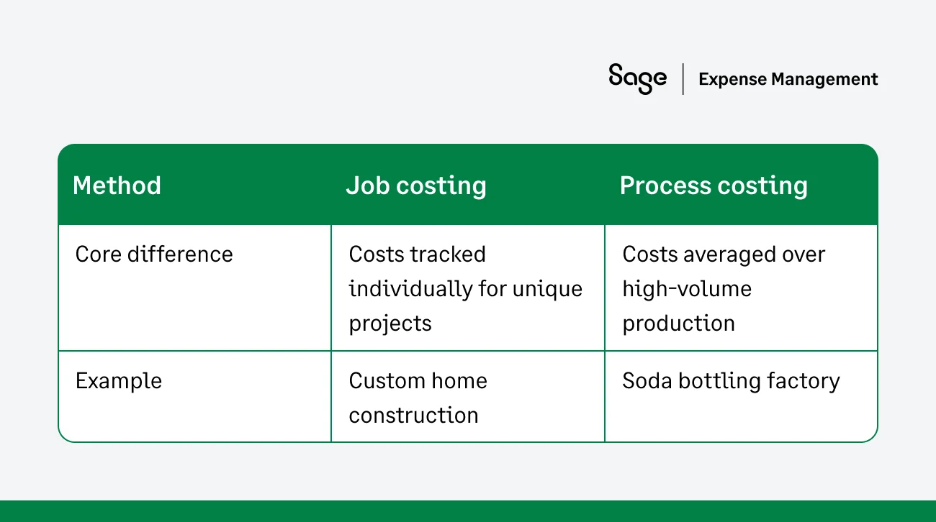
It’s a common point of confusion, but the distinction is vital for accurate reporting:
- Process Costing is for mass production. If you own a factory that makes 10,000 identical bricks, you use process costing to find the average cost per brick.
- Job Costing is for unique, custom projects. Since no two construction sites are identical - different soil, different weather, different local codes - you must track every nail and man-hour assigned specifically to that "job."
Why is Job Costing Important in Construction?
Bridging the "Technique-Economy" Gap
A major industry failure is the disconnect where engineers focus on technical quality while finance teams lack construction context. Job costing forces these two sides together, ensuring that technical design choices are grounded in economic reality.
Escaping the "Three Exceeds" Phenomenon
Construction investment often falls into a trap where budgetary estimates exceed initial estimations, project budgets exceed those estimates, and final settlements exceed the budget. Robust job costing stops this cycle by providing "advance control" rather than settling accounts after the damage is done.
The Strategic Leverage of Early-Stage Cost Control
According to industry research, design costs often represent less than 1% of a project's life cycle cost, yet they influence over 75% of the total expenditure. Job costing at the early stages allows you to exert maximum influence on the final price before the irreversible construction phase begins.
Essential Job Costing Concepts
Before diving into the math, it's important to understand the vocabulary of a high-performing back office:
Cost Codes
Cost codes are the alphanumeric shorthand used to categorize specific tasks (e.g., "03-300" for cast-in-place concrete). These codes allow you to see exactly which phase of a job is eating your profit.
Work in Progress (WIP)
WIP is an accounting method that tracks the value of work currently being performed but not yet billed. It serves as a financial "compass," revealing if a project is on track to hit its margin targets.
Over-Billing vs. Under-Billing
Over-billing occurs when you hold more customer cash than the value of the work performed, while under-billing means your firm is essentially financing the owner's project. Job costing highlights these discrepancies so you can adjust your next progress billing.
Variance
Variance is the difference between your estimated cost and your actual cost. In our experience auditing construction workflows, consistent negative variance in a specific category is a red flag that your bidding team is using outdated data.
Committed Costs
These are obligations you've made (like purchase orders issued to suppliers) that haven't hit your bank account yet. Effective job costing accounts for these to ensure you don't over-spend your remaining budget.
Burdened Labor
Burdened labor is the total cost of an employee, including payroll taxes (burden), benefits (fringes), insurance, and training, rather than just their base hourly wage. Ignoring the burden is the fastest way to lose money on a labor-intensive job.
The Benefits of Job Costing
Beyond just "tracking numbers," robust job costing offers tangible business advantages:
Refined Estimating
Job costing creates a data-driven feedback loop. By comparing final actuals to initial bids, your estimators can refine their logic for the next project, ensuring you never "win" a job that costs you money to complete.
Identifies Profit Leaks
Real-time visibility allows you to see if a specific crew or subcontractor is consistently over-budget. In our experience, catching a leak in week two is the difference between a successful project and a total loss.
Improved Cash Flow
Construction has one of the longest payment cycles (often 50–80 days). Accurate costing ensures you bill promptly and accurately, minimizing the time your cash is tied up in unbilled work.
Mitigating Physical vs. Non-Physical Waste
Job costing highlights both physical waste (e.g., excess materials) and non-physical waste, such as poor negotiation, rework, and administrative delays. Lean construction relies on this data to eliminate non-value-adding activities.
Key Components of Job Costing
To get a true picture of profitability, you must account for these four pillars:
Direct Labor
This is the total burdened cost of all hours worked on-site. You must track on-site time daily to ensure labor costs are tied directly to specific cost codes rather than generic "general labor" buckets.

Direct Materials (Managing Market Price Fluctuations)
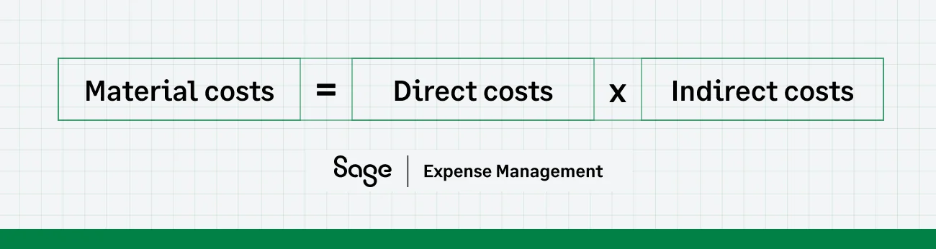
It’s all the physical assets purchased for the job, from lumber to light fixtures. You add all the direct and indirect expenses associated with completing a job.
Direct costs for construction expenses include concrete, wood, wiring, and screws. Indirect costs can be items like machinery, equipment, and safety gear.
Equipment Costs (Internal Allocation vs. External Rental)
This covers fuel, maintenance, and rental fees. For owned equipment, you must develop an internal "day rate" to allocate a portion of the machine's depreciation and maintenance to the specific job.
Subcontractor Fees
These are the costs associated with third-party trades. Job costing ensures you are only paying for the work completed and that any change orders are accurately reflected in the subcontractor’s balance.
Indirect Costs and Overhead Allocation
Overhead includes expenses like office rent, insurance, and executive time. These must be allocated back to projects—often as a percentage of direct costs—to get a true picture of the project's economic reality.
How to Break Down & Track Job Costs
Tracking isn't a one-time event; it’s a continuous cycle:
Step 1: Set the budget
Use your initial estimate to create a "control budget". This should be granular enough to inform decision-making but simple enough for the field to follow.
Step 2: Assign costs
As payroll, material orders, and receipts occur, they must be assigned to a specific project ID and cost code immediately. We call this "sidemarking" at the point of sale.
Step 3: Monitor in real-time
Compare your actual spend against the budget weekly. If you wait for the monthly P&L, you are essentially conducting a post-mortem rather than active management.
Step 4: Reconcile
Ensure your field expenses match your bank statements. Automation helps bridge the "data silo" between what the project manager sees in Excel and what the accountant sees in the ERP.
Step 5: Apply Continuous Improvement (PDCA)
Use the Plan-Do-Check-Act cycle. Identify cost overruns (Check), develop a strategy to reduce them (Plan), implement the fix (Do), and review the results (Act) to iterate for the next phase.
How to Calculate Construction Job Costing
The formula is straightforward, but the accuracy depends on the quality of your data entry.

Note: Overhead is typically calculated as a percentage of total project costs to cover administrative expenses like office rent and insurance.
Common Challenges in Construction Job Costing
Why do so many firms struggle with this? The top problems include:
- The "Shoebox" syndrome: Field crews losing paper receipts or waiting weeks to submit reports is the primary cause of the "visibility gap."
- Cost code confusion: If a laborer codes "drywall repair" as "framing," your historical data for the next bid will be distorted.
- Data silos: When project managers use disconnected spreadsheets, the finance team loses the ability to see "phantom profits" - money that looks like profit because committed expenses haven't been recorded yet.
- The "small job trap": Smaller projects often lose money because the overhead allocation (truck payments, insurance, office rent) eats a much higher percentage of the margin than on a large job.
- The friction of sidemarking: The community consensus is that "sidemarking"—tagging a receipt with a job number at the store - is the most difficult habit to enforce in the field, yet it is the most critical for real-time tracking.
{{challenges-construction-job-costing="/cta-banners"}}
Best Practices in Construction Job Costing
To take your costing to the next level, focus on these operational habits:
Regular Site Meetings
Discuss variances with project managers while they are happening. Transparent communication about the "positive and negative outcomes" of cost control motivates the workforce.
Audit Your Labor Burdens
Re-calculate your labor burden rates quarterly. Changes in workers' compensation premiums or payroll taxes can significantly shift your true labor cost.
Use Historical Audits to Inform Bidding
Don't just archive completed jobs; use "post-project reviews" to feed forward actual costs into your estimating software.
Establishing Robust Change Order Tracking
Decide immediately whether a change order is a separate job or a phase of the original. Mismanaging change orders is a leading cause of legal and financial disputes.
Strategies to Improve Job Costing
If your current process feels sluggish, consider these optimization strategies:
Implement Simple Workflows
Make the field's job as easy as snapping photos and texting them to your system instantly. The less friction there is for the crew, the better your data quality will be.
Connect Your Tech Stack (Bridging Field and Office)
Ensure your expense management, payroll, and accounting software (like Sage Intacct or QuickBooks) are talking to each other in real-time.
Train the Field
Help your foremen understand that cost codes are tools for their success, not just "paperwork". When the crew sees how accurate data protects their project's budget, discipline improves.
{{accounting-silo="/cta-banners"}}
Simplifying Job Costing with Sage Expense Management
Sage Expense Management (formerly Fyle) is built to be the universal "connective tissue" for construction firms, regardless of their accounting tech stack.
Whether you use Sage 300 CRE and Sage Intacct or other major platforms like QuickBooks and Xero, SEM transforms job costing from a reactive chore into a proactive advantage.

- Real-time network feeds: Unlike 30-day bank statements, SEM identifies a swipe the second it happens.
- Conversational AI capture: The system texts the employee immediately, prompting them to reply with a receipt photo.
- Automated MCC mapping: SEM uses Merchant Category Codes to auto-fill cost codes, ensuring "Home Depot" spend always hits the right bucket.
Conclusion
Job costing is the difference between a construction firm that survives and one that thrives.
By moving away from reactive spreadsheets and toward integrated, real-time expense tracking with Sage Expense Management, you protect your margins and gain the clarity needed to scale.
{{master-job-costing="/cta-banners"}}