


In today’s landscape, the business mantra has shifted from growth at all costs to efficient growth. Cost reduction is no longer just a defensive tactic used during downturns; it is a continuous strategic discipline essential for long-term success.
This guide delves into the concept of cost reduction, exploring its various aspects, strategies, and implementation. By understanding how to effectively reduce costs, businesses can improve profitability, strengthen financial health, and gain a competitive edge.
What Is Cost Reduction?

It’s about identifying areas where spending can be optimized or eliminated altogether without compromising quality or core operations.
Good Costs vs Bad Costs
To practice effective cost reduction, you must distinguish between good costs and bad costs:
- Good Costs: Expenses that drive revenue or efficiency (e.g., sales training, high-performance software, R&D).
- Bad Costs: Expenses that drain value without return (e.g., late fees, unused software licenses, manual data entry labor).
Cost Reduction vs. Cost Cutting vs. Cost Avoidance
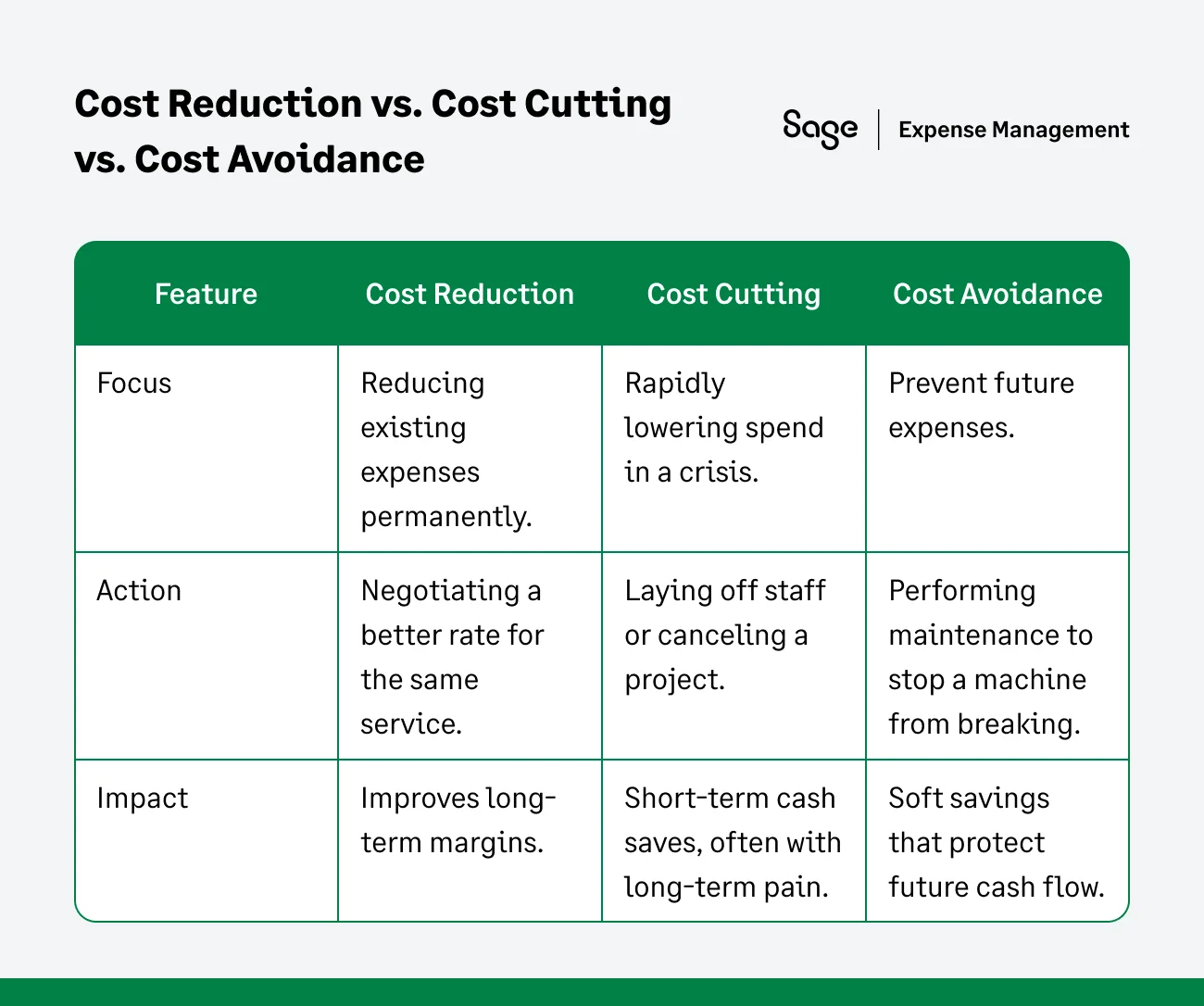
Many finance leaders use these terms interchangeably, but they are distinct concepts with different impacts on your business. Understanding the nuances is critical for building cost reduction strategies.
- Cost cutting is reactive. It happens when a business is in a crisis.
Example: Slashing marketing budgets by 50% or laying off staff. While it saves cash immediately, it often damages morale and long-term growth capacity.
- Cost avoidance is preventive. It involves spending money now to prevent larger expenses later.
Example: Investing in cybersecurity software avoids the massive cost of a data breach, or performing fleet maintenance avoids engine failure.
- Cost reduction is strategic. It focuses on permanently lowering the unit cost of doing business without sacrificing output. This is a sweet spot for healthy companies.
Why Is Cost Reduction Important?
There are numerous reasons why cost reduction is crucial for businesses:
- Increased profitability: Reduced expenses directly translate to higher profits, allowing companies to reinvest in growth initiatives or improve shareholder value.
- Improved cash flow and financial health: Cost reduction strengthens a company’s cash flow, providing a financial buffer for unexpected situations and enabling smoother operations.
- Enhances competitiveness: By lowering costs, businesses can offer more competitive pricing, attracting new customers and retaining existing ones.
Understanding Your Costs: The Foundation
Before implementing cost reduction strategies, you must fully grasp your company's cost structure. Here are some key concepts to understand:
Direct Vs. Indirect costs
Direct costs are directly attributable to producing goods or services (e.g., raw materials, labor). Indirect costs support overall operations but aren't directly tied to production (e.g., rent, utilities).
Fixed Vs. Variable costs
Fixed costs (e.g., rent, salaries) remain constant regardless of production volume. Variable costs (e.g., raw materials, direct labor) fluctuate with production volume.
Sunk Costs
Sunk cost is the money that has already been spent and cannot be recovered. In the context of cost reduction analysis, this occurs if you continue to spend money on a failing project or expensive software, simply because you have already invested heavily in it.
Techniques For Analyzing Spending Data
Analyzing spending data is crucial for identifying cost-reduction opportunities. Here are some common techniques:
- Trend analysis: Identify spending patterns over time to pinpoint areas with increasing costs.
- Benchmarking: Compare your spending against industry averages to see if there are areas for improvement.
- Variance analysis: Investigate discrepancies between budgeted and actual costs.
{{cr1="/did-you-know-cards"}}
Identifying Areas for Cost Reduction
By analyzing spending data, you can pinpoint areas for cost reduction. Some common areas include:
- Procurement: Negotiate better deals with suppliers, consolidate vendors, and optimize inventory management.
- Operations: Automate tasks, streamline processes, and eliminate waste.
- Overhead costs: Review subscriptions, memberships, and other recurring expenses to identify potential savings.
The Hidden Risks of Aggressive Cost Reduction
Before slashing budgets, it is critical to understand the potential downsides. Short-sighted cost reduction can solve a short-term cash flow issue while creating a long-term strategic deficit.
- Quality dip: Switching to the cheapest vendor often results in lower quality materials, which can damage your brand/ company’s reputation.
- Employee burnout: Reducing employee headcount without reducing workload per employee can lead to employee burnout. The cost of recruiting a replacement often exceeds the salary saved.
- Stifled growth: Cutting marketing or R&D budgets may improve this quarter's P&L for your company, but it can potentially starve the pipeline for next year's revenue.
Building A Successful Cost Reduction Strategy
Developing a successful cost-reduction strategy requires careful planning and execution. Here are the key steps:
Defining Goals and Objectives
- Short-term vs. Long-term goals: Set both short-term (e.g., reduce marketing spend by 5% in Q3) and long-term goals (e.g., achieve a 10% overall cost reduction within a year).
- Aligning cost reduction with company strategy: Ensure cost reduction efforts support the company's overall strategic objectives.
Assessing Cost Reduction Potential
- Identifying areas with the most impact: Analyze spending data to pinpoint areas with the highest potential for cost savings.
- Prioritizing opportunities: Focus on areas with the biggest impact and easiest implementation.
Developing a Tailored Plan
- Considering company size, industry, and goals: The plan should be customized to your company’s specific context and needs.
- Flexibility and adaptability in the plan: The plan should allow for adjustments as needed based on market conditions or new opportunities.
The Core Cost Reduction Strategies
Based on financial data and industry trends, here are 10 actionable strategies to optimize spend without sacrificing growth.
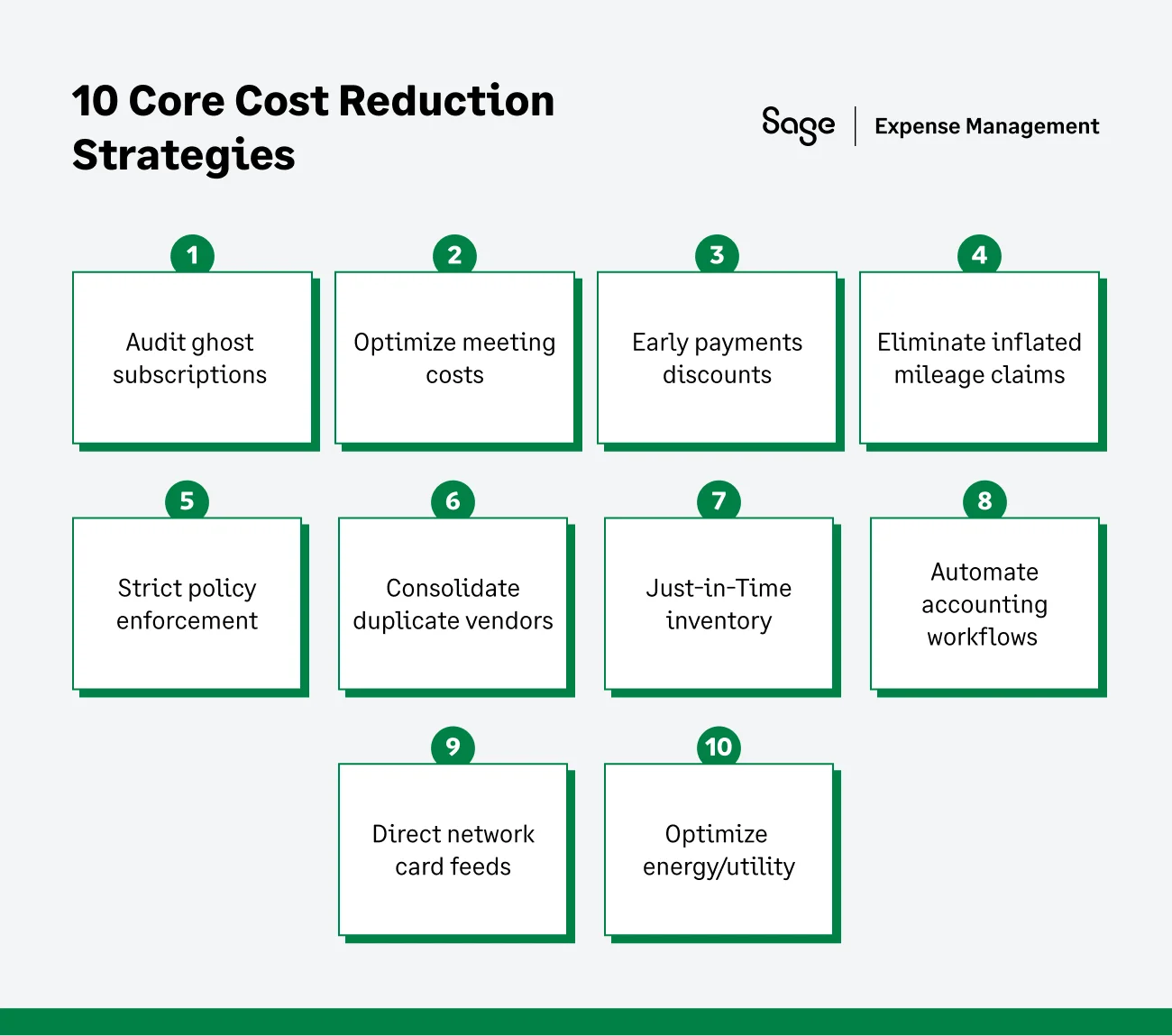
Audit ghost subscriptions
In recent years, mid-market companies have seen a surge in software purchased by individual employees without IT approval. These tools often turn into ghost subscriptions- licenses that auto-renew on corporate cards but haven't been logged into for months.
The strategy? Conduct a quarterly audit of all recurring credit card charges. Ideally, if a tool hasn't been used in 90 days, it is advised to cancel it to optimize for cost reduction.
Optimize meeting and travel costs
Unproductive meetings are a massive hidden labor cost. For example, a 1-hour meeting with 10 managers earning $60/hour could cost the company approximately $600. Now suppose if that meeting happens weekly, the cost rises to approximately $31,200 per year.
The strategy? Limit meeting attendance to only those who are essential. If a decision can be made via email or a quick chat, cancel the meeting.
Leverage early payments discounts
Take advantage of suppliers' early payment discounts to improve cash flow. Actively manage contracts to ensure you’re not paying for unused services. Don't just negotiate the sticker price; negotiate the payment terms.
Many vendors offer a 2/10 net 30 deal, meaning you get a 2% discount if you pay the invoice within 10 days instead of 30.
The benefit? If you have strong cash flow, this is effectively a risk-free 2% return on your capital.
Eliminate inflated mileage claims
When employees self-report mileage, they often estimate distances, leading to rounding errors. With the 2026 IRS mileage rate at 72.5 cents per mile, these small inflations add up.
The strategy? Move away from odometer readings. Use GPS-enabled tracking that calculates the exact distance from Point A to Point B. This typically reduces mileage spend by 10-15%.
Want to know more on how to track mileage using GPS-enabled tracking? Read our article here.
Strict policies on unverified spend
A major risk for companies is unsubstantiated spending- expenses that are reimbursed without a valid receipt. This creates a significant tax liability during an audit.
The strategy? Implement a policy where expenses must be submitted with a digital receipt within 30 days. If they aren't, the system should automatically flag them as non-reimbursable.
Consolidate duplicate vendors
Often, decentralized teams unknowingly buy duplicate tools. For example, your marketing team might be paying for Asana, while your sales team is paying for Monday.com, and your engineering team uses Jira.
The strategy? To standardize your tech stack. By consolidating all teams onto a single project management platform, you not only reduce administrative chaos but also gain leverage to negotiate an enterprise tier volume discount, often saving 20-30% compared to individual departmental licenses.
Implement Just-in-Time (JIT) inventory
For businesses in the construction, manufacturing, or retail industries, holding excess stock is a hidden cash drain due to storage costs, insurance, and the risk of becoming outdated.
The strategy? To adopt a Just-in-Time (JIT) approach where materials are ordered and received only as they are needed in the production process. This frees up working capital that was previously tied up in warehouse stock and significantly lowers warehousing overhead.
Automate manual accounting workflows
Manual data entry is one of the most expensive hidden costs in finance. Paying a highly qualified accountant to manually type receipt data into an ERP system is a poor use of resources.
The strategy? To automate the expense reconciliation process. Tools that sync expense data directly to your General Ledger (GL) eliminate the need for manual entry. If you can save your finance team 10 hours a month per person, that is thousands of dollars in labor savings annually that can be redirected toward strategic analysis.
Switch to direct network card feeds
Relying on monthly bank statements creates a visibility gap for higher management, especially during audits. It is not possible to reduce any costs if you are looking at data that is 30 days old or more.
The strategy? Switch to expense management platforms that offer real-time feeds directly from various credit card networks. This means that you can see a transaction the moment it happens via card, enabling your team to catch any policy violations immediately rather than weeks later when the money is already gone.
{{cr2="/did-you-know-cards"}}
Optimize energy and utility usage
For businesses and companies with physical offices or fleets, utility and fuel costs are major variable expenses.
The strategy?
- For offices: If your company has shifted to a hybrid model (work from home + work from office), you can reduce your office footprint or implement smart thermostats that lower energy usage on work from home days.
- For fleets: By using route-optimization software, you can reduce fuel consumption. Even a 5% reduction in fuel usage across a fleet of 20 vehicles can result in substantial annual savings.
Why Manual Cost Reduction Attempts Often Fail
You might have the right strategies, but without the right tools, they are nearly impossible to enforce. This becomes a visibility gap.
- The data lag: If your company relies on spreadsheets/ excel templates, your finance team often doesn't see expense data until 15-30 days after the money is spent. Costs cannot be controlled in hindsight; they need to be done in real-time.
- The administrative cost: It isn’t financially feasible for a company to spend $20 in labor (admin time) to save $10 on a bill. Manual reconciliation is expensive and prone to errors.
- The enforcement problem: A finance manager cannot manually check every single $15 lunch receipt against policy without this process becoming a bottleneck in the expense reporting process.
To truly reduce costs, you need to see them as they happen, not weeks later.
How Sage Expense Management (formerly Fyle) Helps
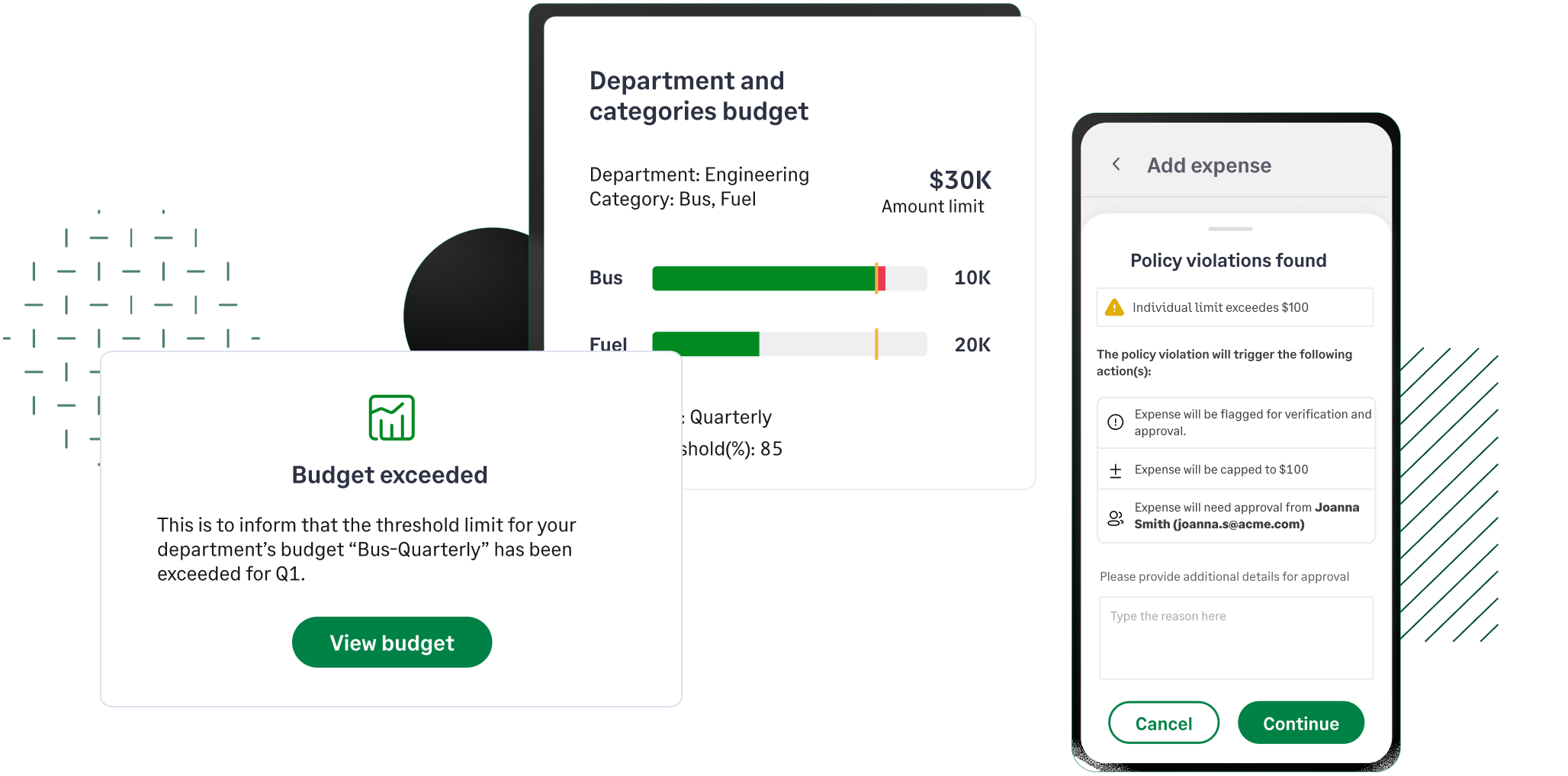
This is where Sage Expense Management bridges the gap. It transforms cost reduction from a manual chore into an automated guardrail, giving you the tools to enforce your strategy in real-time.
Real-Time visibility & Easy receipt submission
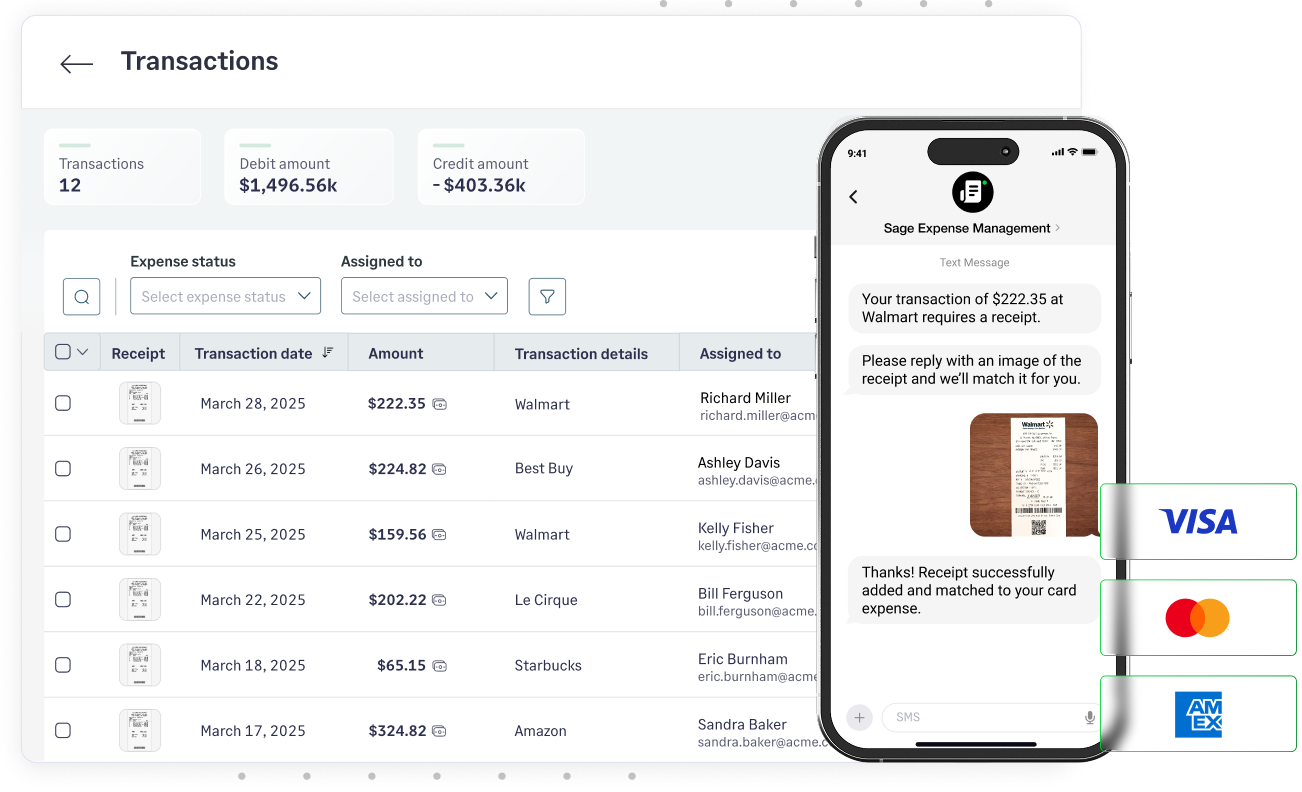
Direct integrations with major credit card networks such as Visa and Mastercard empower you to see transaction data instantly. You know exactly what is being spent, by whom, and where, the moment the card is swiped; no more waiting for month-end statements.
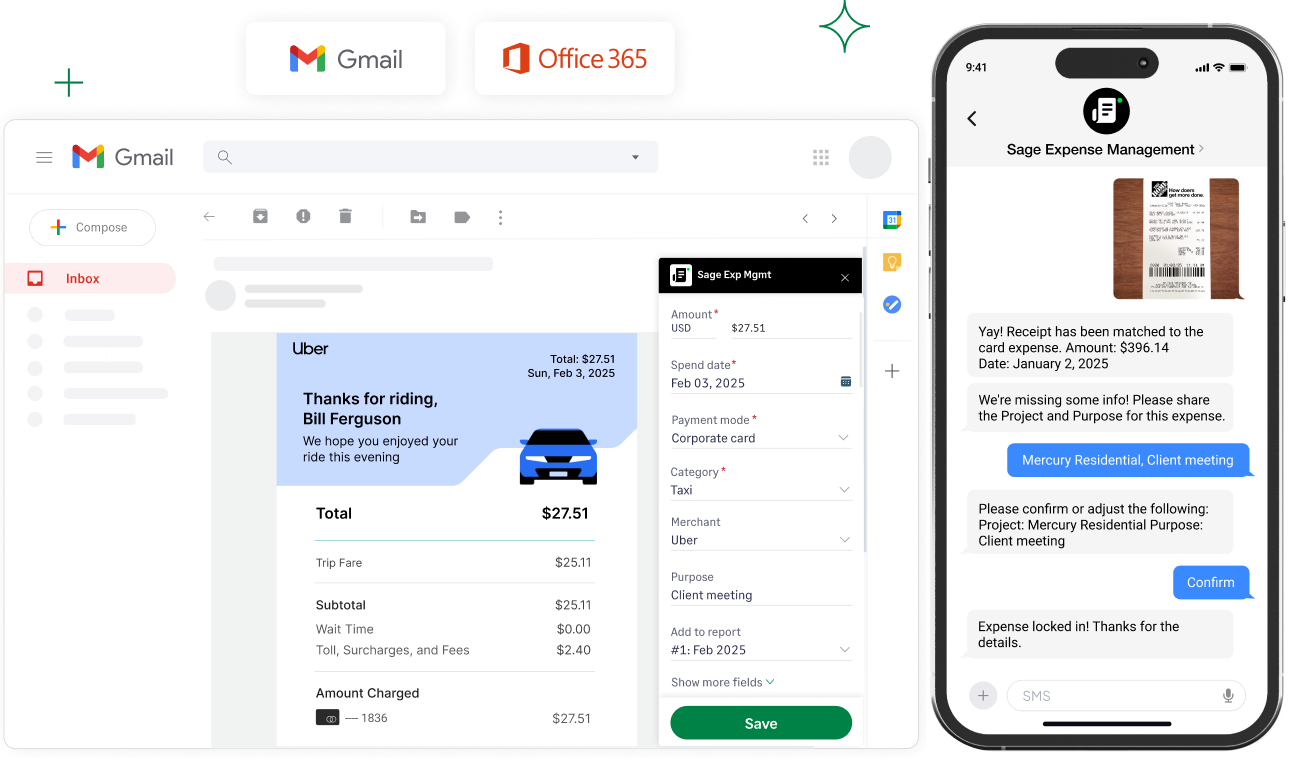
Employees can also submit expense receipts via text messages and other everyday apps. This eliminates the need for manual data entry and paper trails, saving time and reducing the risk of errors.
Proactive budget enforcement
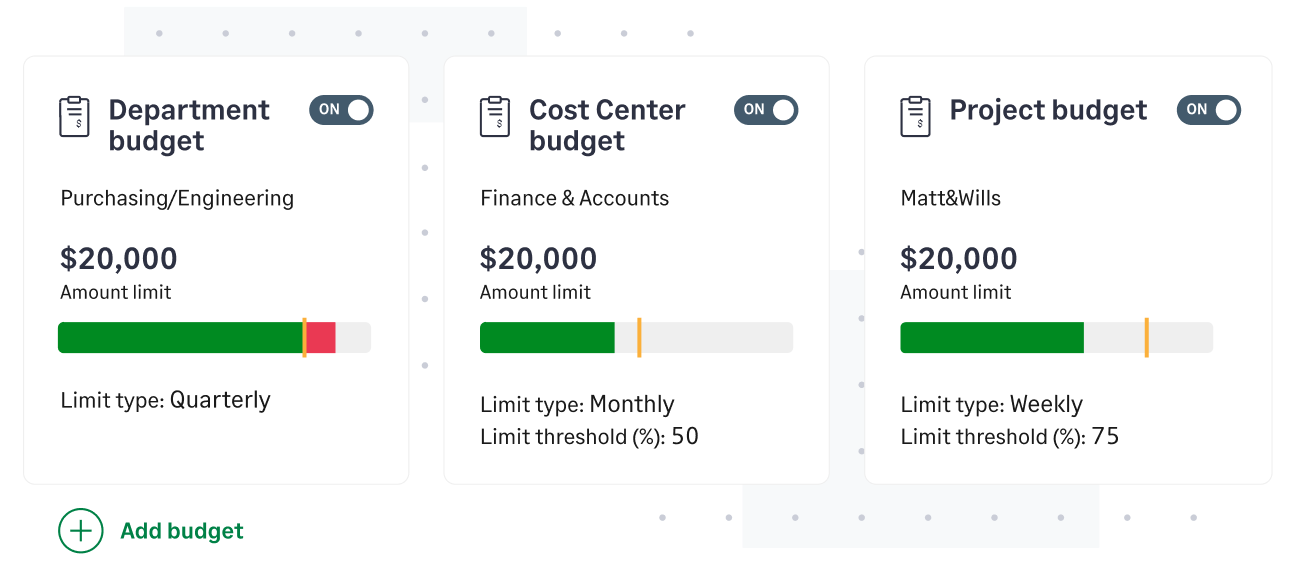
Stop overspending before it happens with hyper-granular controls. Sage expense management allows you to set precise budgets by project, department, cost center, or category. You can also automatically categorise expenses based on receipt information, making it easier to analyze spending patterns and identify areas for cost reduction.
Example: Set a specific travel cap for the sales team without affecting other departments.
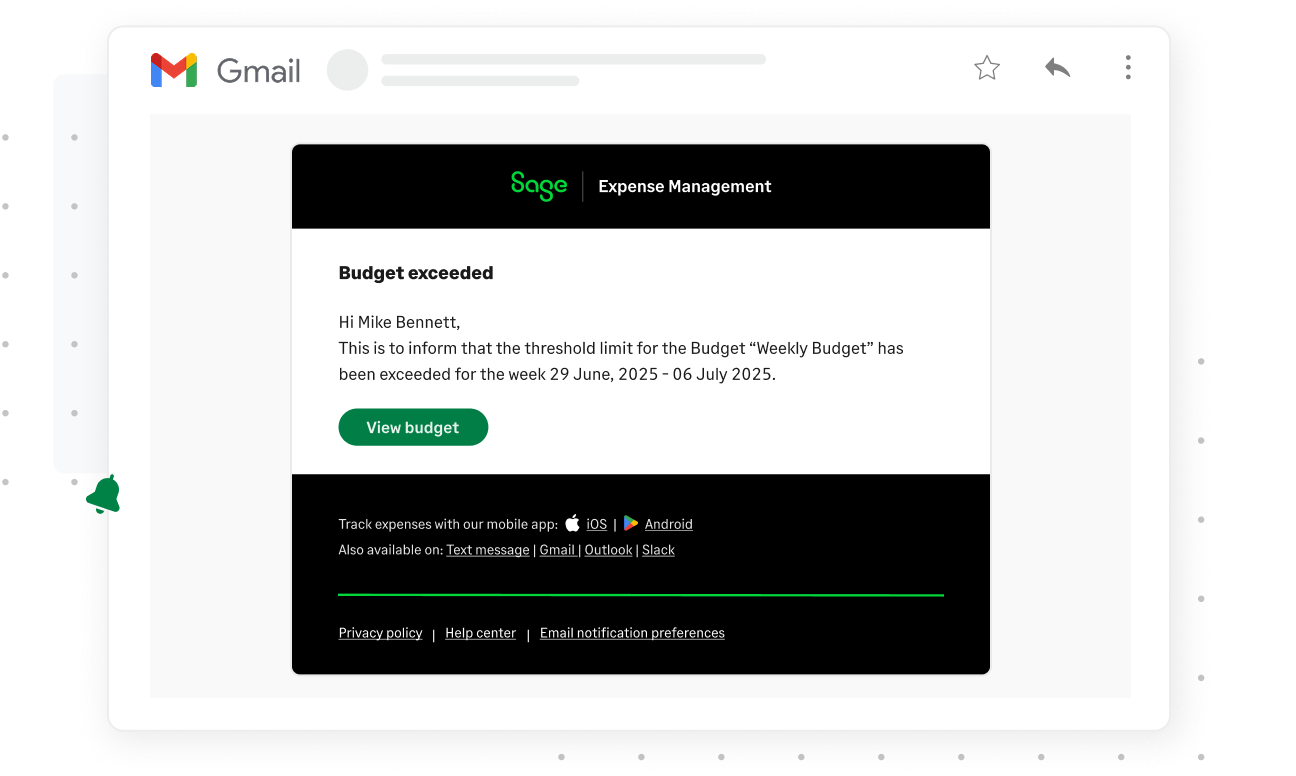
- Gamified visibility: Employees can see a real-time progress bar of their remaining budget, encouraging them to self-regulate spend.
- Early warning system: Receive automated alerts when a project hits 80% of its budget, allowing you to intervene proactively rather than reacting to an overrun.
Automated policy compliance
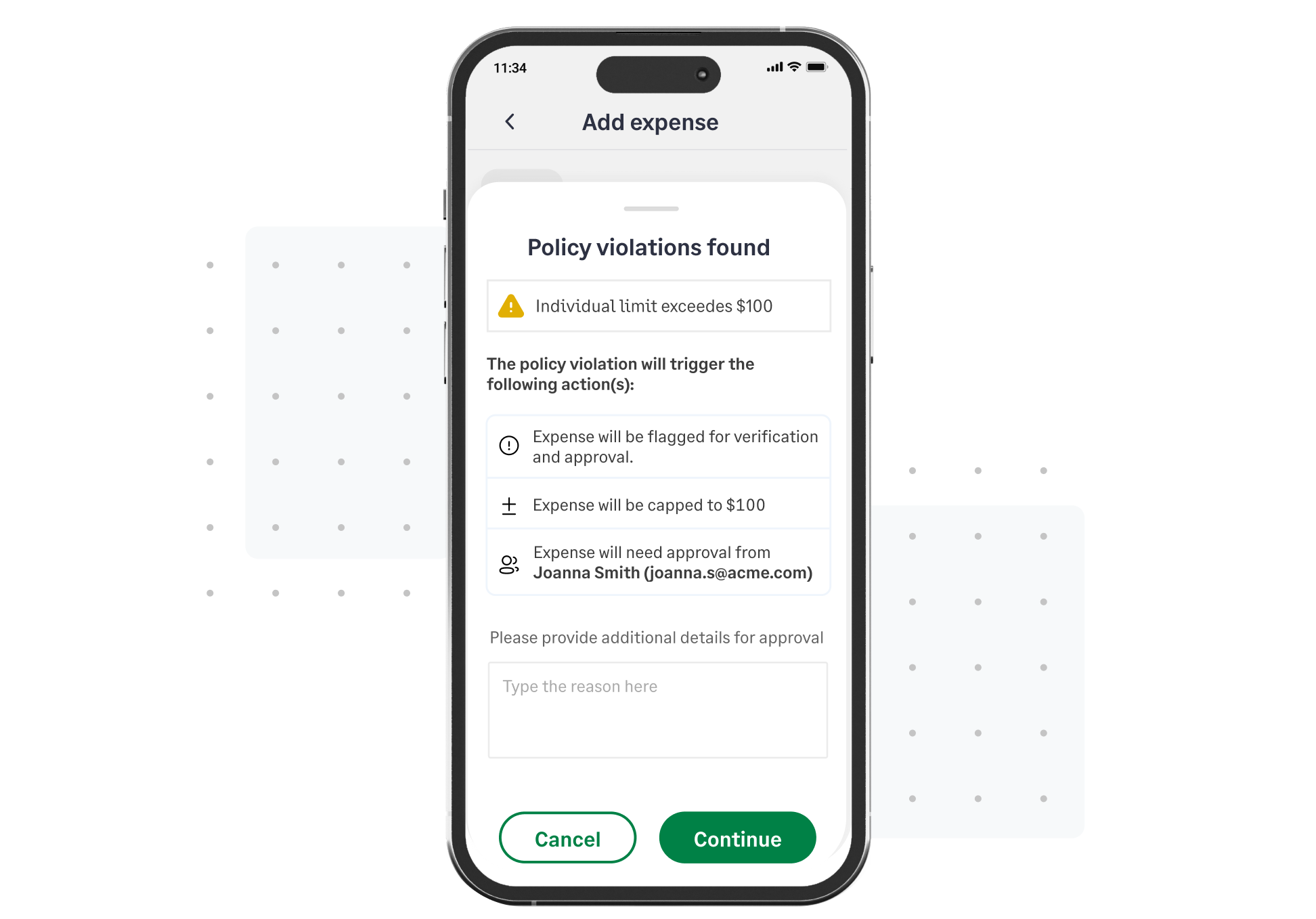
The automated expense management system, such as Sage expense management, automatically flags out-of-policy spend (like a flight upgrade or a weekend meal) before it is reimbursed. This stops bad costs at the source.
Digital audit trails
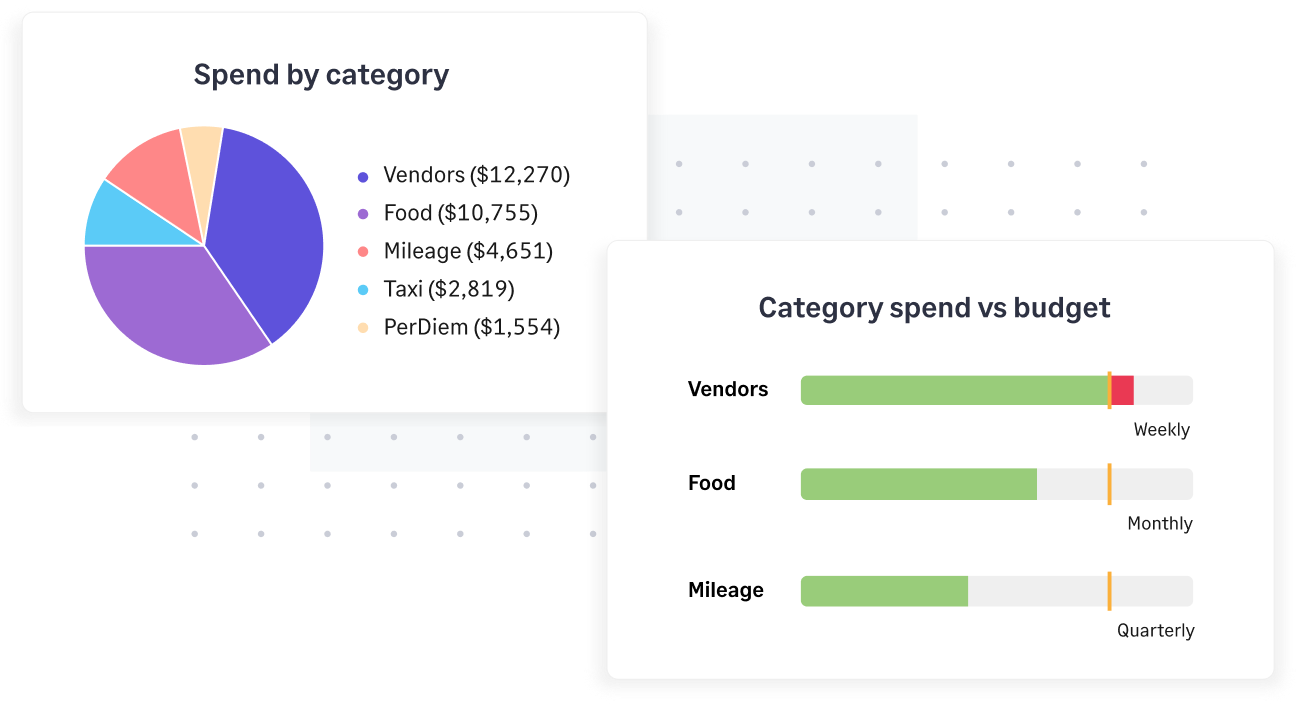
Sage expense management solves the unsubstantiated spend risk by ensuring every expense is backed by a digital receipt and a clear business purpose, always keeping you audit-ready.
With clear visibility into historical spending data, businesses can create more accurate and data-driven budgets, ensuring they allocate resources efficiently.
Real-time reporting
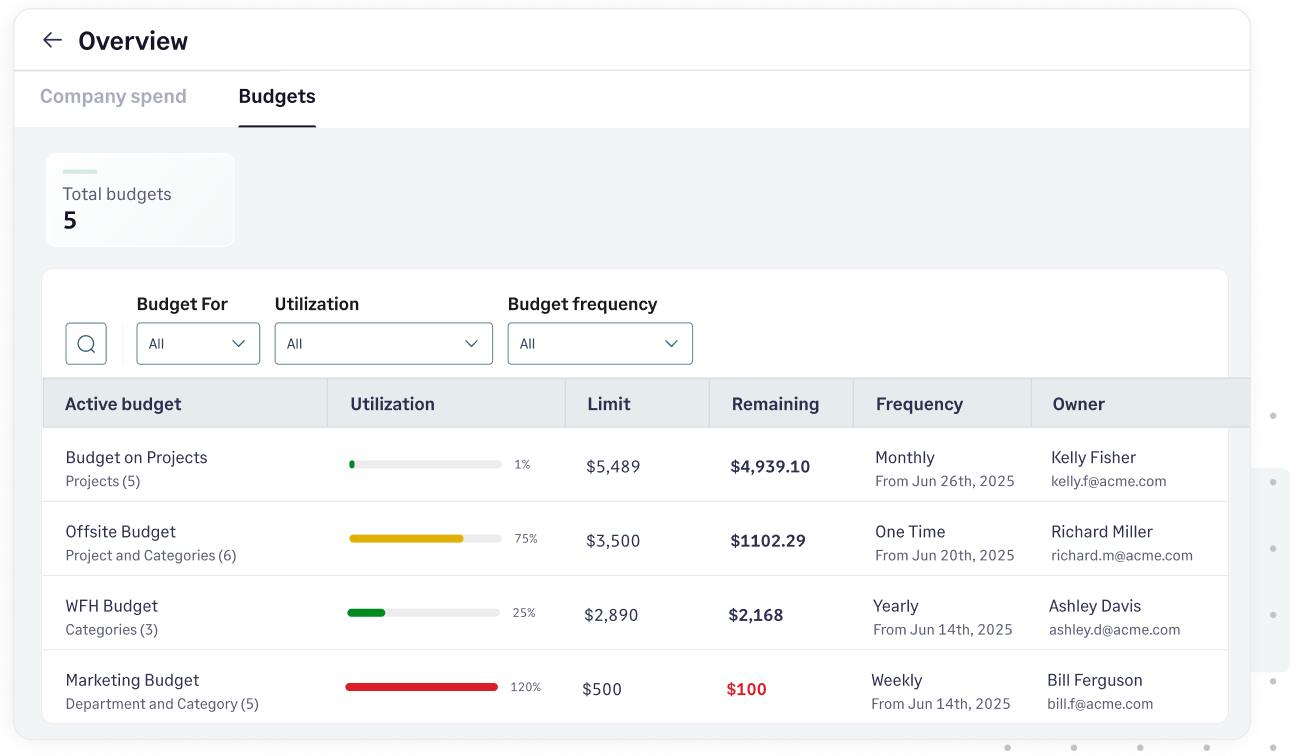
Get real-time dashboards and reports that clearly show company spending across departments, categories, and vendors. This allows for proactive cost management and identification of potential spending anomalies.
Remember, cost reduction is an ongoing process, not a one-time event. Here's where an expense management software such as Sage Expense Management becomes an invaluable tool. It streamlines data collection and analysis, automates tasks, and provides valuable insights to help you continuously optimize your strategies.
{{cr="/cta-banners"}}
.jpg)